Sprint and middle-distance approaches in competition strategies and sports odds
AW promotion
Understanding the intricacies of sprint and middle-distance racing can provide valuable insights into the dynamics of sports betting odds. These races, characterised by a blend of speed and tactical acumen, reflect broader strategies employed in athletic competition. By examining race tactics, one gains a clearer perspective on interpreting odds in sports.
Sprint and middle-distance events are cornerstones of track and field athletics, each demanding a unique combination of explosive speed and strategic pacing. These races challenge athletes to balance raw power with precise timing, making them fascinating to both participants and spectators. The strategies employed by runners can shed light on broader sporting principles, offering a framework for understanding odds in sports betting and various outcomes in athletics.
Performance Variables Influencing Race Outcomes
The complexities of sprinting lie in mastering acceleration phases, optimising stride length, and maintaining a high turnover rate. In contrast, middle-distance races demand keen awareness of pacing strategies and endurance management. Small adjustments in these variables can significantly alter an athlete's finishing position, underlining the importance of tactical precision.
As you delve into these dynamics, understanding odds in sports betting becomes pivotal. Factors such as an athlete's current form, recent performances, and prevailing environmental conditions play a crucial role in shaping the perceived likelihood of different race outcomes. By analysing these elements, enthusiasts can gain deeper insights into the nuanced interplay between athletic performance and betting odds.
For those keen to explore more about race demands and athlete preparation, reputable sources like the official World Athletics page offer comprehensive information. This enables a better grasp of how small variances in tactics can influence not just individual races but also broader betting perspectives.
Weather conditions and track surfaces also play pivotal roles in determining race outcomes. Athletes must adapt their strategies based on factors like wind resistance, temperature, and track composition. These environmental variables can significantly impact performance metrics, making them crucial considerations when analysing potential results. Understanding how different athletes perform under varying conditions provides valuable context for interpreting race dynamics and associated odds.
Practical Insights for Interpreting Racing Form
From an online sports betting perspective, the demands of each race, alongside athlete preparation, provide essential insights. Many platforms offer opportunities to explore diverse sports markets through a visually engaging interface. Understanding how athletes' strengths align with seasonal trends enhances one's ability to evaluate potential outcomes accurately.
The intersection of racing tactics with online gaming is profound. Observers who meticulously analyse each athlete’s form can make informed decisions that reflect both current performances and historical data trends. The emphasis is on responsible engagement, where observing patterns over time helps refine predictions within both athletic contexts and online platforms.
The strategic alignment seen in racing forms a parallel to understanding odds in sports betting, where careful observation is key to making educated guesses about future performances. This approach not only enriches your understanding but also elevates your overall experience within the competitive world of sports wagering.
Common Challenges in Sprint and Middle-Distance Tactics
The path to mastering sprint and middle-distance events is fraught with challenges such as overexertion during early phases or inconsistent pacing leading to mental fatigue. Recognising these pitfalls is crucial for enthusiasts aiming to better assess potential race outcomes. By acknowledging these hurdles, you enhance your ability to interpret athletic performances accurately.
What's more, the mental aspect plays a significant role in determining success on the track. Overcoming psychological barriers is as critical as physical preparation; thus, having insight into these elements can significantly influence your assessment process.
Understanding these common challenges allows you to appreciate the intricate nature of racing tactics. This knowledge not only aids in evaluating athlete readiness but also informs your broader perspective on sports odds assessment.
Yared Nuguse: "I want to be myself in every way"
You might not be about to find Yared Nuguse engaging in any wars of words, but the Olympic 1500m bronze medallist explains why he expects to be a contender for the big middle-distance prizes again
Yared Nuguse wants to make something clear. He is not about to suddenly throw himself into the headline-making, hype-creating, tension-inducing trash talking that has become such a big feature of men’s middle distance running in recent years. What you can expect from the softly spoken American, however, is for him to be right in contention for the sport’s major honours once more in 2025.
Rather than making any resolutions every January, instead the Olympic 1500m bronze medallist who kept defending Olympic champion Jakob Ingebrigtsen off the Paris podium sets himself a theme for the 12 months to come.
“It helps to align my goals for what I generally want to be doing in that year,” he says. “For example, last year was a year of fulfilment. I wanted to go and fulfil the things that I felt I was capable of doing – seizing my moment and not being as afraid to take risks and do things that scared me a little bit. That was something I was able to do well at the Olympics, as well as in my normal day to day life.”
The theme for this year?
“Authenticity. I've always been a person who has wanted to be myself in every way that I present myself. A lot of the time I can hide a little bit or I'm not quite as forthcoming with who I really am, just because I was always nervous about what people would think. But over the last couple of years, and especially this year, I really want to focus on being unapologetically myself, doing the stuff I want to do, not caring what people think about it and always being me because I'm the only person who can be me.”
Who is Yared Nuguse, in that case? He is an athlete who didn’t take up running until high school, when one of his teachers suggested he could be very good at it, and now admits to being “addicted” to the process of putting one foot in front of the other.
Yet his interests away from the track are many. Following the LA Olympics he plans to go to dental school to fulfil another very different ambition, while his downtime is usually spent drawing, reading fantasy novels and also looking after his pet tortoise, Tyro.
All of that means that, when Ingebrigtsen and Josh Kerr, the arch rivals who have made a second job out of tearing verbal strips from one another, you won’t find Nuguse stepping up to the microphone to throw his own barbs.
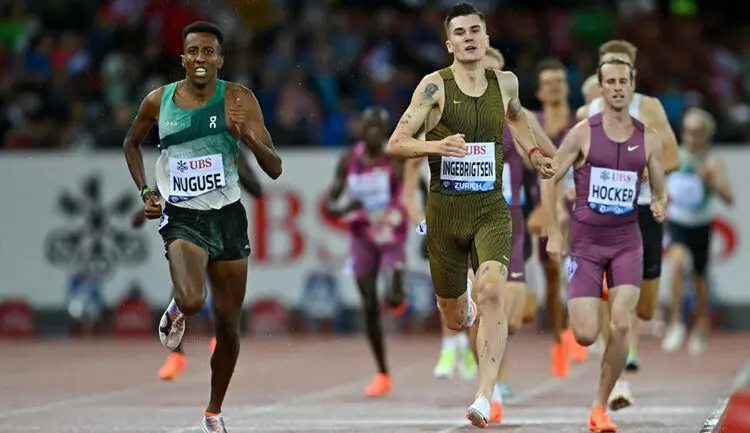
Yared Nuguse and Jakob Ingebrigtsen (Getty)
“People may expect some of that from me, but that wouldn't really be authentic to myself,” he says. “I'm not the kind of person to just start boasting about how confident I am about a race right before, or anything like that. Some people's personalities are more like that, and mine is more to keep it to myself. I might think those things but I would never say those things. I'm not much of an entertainment person when it comes to track and field. I'm more just like my silly little self.
“I don't pay as much attention [to the trash talking] as other people do, but I think it's been really fun and interesting to get a lot more interest and intrigue in track and field. But then having Cole upset all that at the Olympics was an even greater result – all of it is just like poetry.
“It's been fun to be a part of that and not really be at the centre of it because, again, I wouldn't really want to be. I’ve enjoyed seeing it all shake out and I'm very curious to see how it continues on this year, especially with Cole now as the Olympic champion.”
The watching athletics world feels exactly the same. The Cole to whom Nuguse refers is, of course, Cole Hocker – another quiet American whose closing surge saw him cross the line ahead of world champion Kerr in the Stade de France.
“I was underestimated and Cole was definitely underestimated,” says Nuguse of that race. “Cole beat me at the US trials [Nuguse was second], so I knew he was going to be good, but I feel like a lot of people were just not really paying attention to him because he hadn't done a lot of international racing or winning at that stage before the Olympics.
“There was a lot of rivalry going on, so that’s why that was so hyped up, and those guys did race extremely well before the Olympics so it makes sense why they were as highly rated as they were. But that’s why we race these races. You never know what’s going to happen.”
Yared Nuguse (Getty)
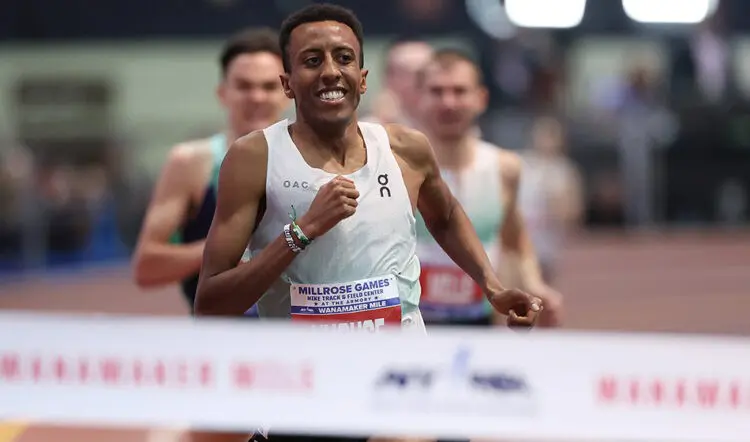
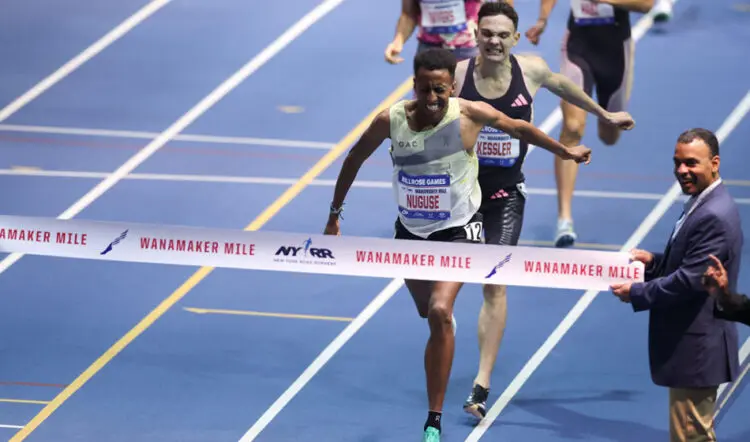
One of the early indications as to how this year might shape up is about to arrive in the form of the Wanamaker Mile at the Millrose Games in New York. It’s an event Nuguse has won for the past two years but he will be coming up against Kerr, to whom he came second over 3000m at the World Indoor Championships in Glasgow last March. Nuguse, second on the all-time list, set his indoor mile PB of 3:47.38 at the Armory in 2023, while Kerr’s PB is 3:48.87 from the previous year.
Along with Ingebrigtsen and Hocker, those two form a formidable quartet that look likely to have the final say in where the big prizes will end up this year. Yet, with athletes such as 2022 world champion Jake Wightman on the comeback trail, young Dutchman Niels Laros growing in stature and another American, Hobbs Kessler, also improving and racing at Millrose, the threats are numerous.
The year will come to a climax with the World Championships in Tokyo in September and it’s telling that Asbel Kiprop, who was banned for doping in 2019, was the last man to win successive world 1500m titles when he took gold in 2015. Since then Elijah Manangoi, Timothy Cheruiyot, Wightman and Kerr have all taken the crown.
“It's insanely deep, and that's what's made this point of 1500m running so much fun,” says Nuguse of the current landscape. “It's basically the best that it's been in many, many years and it has just made me feel really grateful to be a part of it.
Yared Nuguse pips Josh Kerr (Getty)
“You don't want to look back and be like: ‘Man, my era of 1500m running kind of sucked!’. I'm going to look back and think: ‘This was a crazy time for 1500m running’.
“The Olympics was obviously the most evident of how close the four of us were and I think every race for us is going to be different, it's just the little things that are going to determine who wins. But all of us are definitely in contention [for the world title] and I'm definitely going to believe in myself now, especially after last year.
“So much of it is confidence and just believing that you can do that. I'm sure all of us are thinking we’re going to win this and I'm definitely no different. We're all good enough to do it so it's just a matter of who wants it most and who makes the right play on the day.”
Nuguse will also take confidence from the man who has been guiding him since 2022. He is part of the Boulder-based On Athletics Club (OAC) led by Dathan Ritzenhein and, under the watchful eye of the two-time Olympian, has not only won global medals but also become the American record-holder over 1500m and the mile.
“My relationship with Dathan has always been good,” says the 25-year-old. “From the beginning it felt like he really knew what he was doing and was able to train me well without overdoing it, which I really appreciate. I'm not quite the ‘hundreds of miles a week distance runner kind of guy’, so it really helps that the coach understands that and really believes in you the way that you believe in yourself a lot of the time.
“He'll tell me: ‘You can win this race. You’ve got to just believe in it and make it happen’, and it's good hearing it from someone else that knows how I've been training and knows how good I am because, a lot of the time, it carries a little more weight. I've always appreciated Dathan.”
Nuguse will also be part of one of the most talked about additions to the athletics calendar this year – Grand Slam Track. He, Kerr and Hocker are all signed up to compete in the four-event series that will see them all tackle both the 800m and 1500m.
For the former, racing the short distance will be another sizeable step outside of his comfort zone.
Yared Nuguse and Hobbs Kessler (Getty)
“I'm very excited to see how Grand Slam goes because I feel like it's something completely new,” he says. “In my second year [as a pro] I thought: ‘Wow, you kind of just do the same things over and over again. The same races, same people’, but I think Grand Slam turns that on its head a little bit.
“I get to race the guys who I know are the best and really hone my racing skills against them versus just straight out time trialing like most other races I do are. I think I'm better at the 800m than I give myself credit for. I have a lot of confidence in the 1500m, but not so much in the 5000m or 800m but that's okay because I know I am fit.
“I think a lot of the time 800m races are just very aggressive and I bogged down in a lot of aggressive kind of races. So maybe I'll finally learn to get at least a little aggressive myself and not get caught up at the back, but we will see. I'm excited. I think I'm going to do well. It'll definitely help me hone a little more speed and more racing tactics, because even though I have learned a lot, I think there's always more to learn.”
Nuguse’s opponents should take note, though. There is an ever growing body of evidence to suggest that the quiet man is capable of making a big noise.
“I've been through so many very serious moments and races and experiences where I feel more confident coming into those spaces than I ever did when I first joined OAC as a professional runner,” he says. “I think a lot of the time I was nervous but now I've done a World Championships, I've done an Olympics, I got a medal, so it feels like nothing can really surprise me any more. It’s just growing a little older and wiser.”
This interview first appeared in the February issue of AW magazine, which you can buy here, and was done before his world indoor mile record at the Millrose Games on February 8
Glasgow 2026 to boost Scotstoun's athletics legacy
The stadium will be host to the athletics during the scaled-back version of the Commonwealth Games
With the 2026 Commonwealth Games officially set for Glasgow, Scotstoun is poised to take centre stage as it hosts the athletics in the scaled-back event.
Known for its distinctive blue track, the stadium plans to expand its current capacity from 4765 to accommodate between 10,000-11,000 spectators with temporary seating.
The decision to host the Games in Glasgow comes after the Australian state of Victoria withdrew due to rising costs.
Glasgow has a strong track record in hosting the event, having successfully managed the Games in 2014 with the athletics taking place at Hampden.
Hampden accommodated 40,000 athletics fans while the Alexander Stadium in Birmingham welcomed 30,000 for the Games in 2022.
Scotstoun's more intimate setting will be a unique atmosphere as the smaller version of the Games will be distinctly different.
Scotstoun Stadium (Getty)
AW spoke with Jon Doig OBE, the Chief Executive of the Commonwealth Games Federation Scotland at the official launch of the Games in Glasgow. He said: "We have been working on this for just under 12 months, looking over it in terms of the concept and if we could go through and deliver it.
"The earliest thing we had to look at was athletics and whether we could deliver athletics in Scotstoun Stadium and the answer we got back in terms of feasibility was yes.
"We have obviously already got a main stand at Scotstoun but the rest of the seats will be wrapped around with temporary seating.
"The temporary seating will take the number to 10,000-11,000 and in that aspect we can create an absolutely brilliant atmosphere when the athletes are competing and running around."
Dwain Chambers (Getty)
The stadium holds a historic legacy in athletics that dates back to the late 1890s, when it first hosted cross country events.
From 1903 to 1913, the Scottish National Cross Country Championships took place annually at Scotstoun, with the exception of 1907, when they were held in Portobello, Edinburgh.
It has also been the home of Victoria Park AAC since its foundation in 1930.
Since its renovation with the all-weather track in the mid-90s, the stadium has hosted numerous prestigious events.
The British Milers' Club held grand prix meetings at the stadium in 1999, 2000 and 2001, attracting top athletes from across the UK.
International events were also held, including in 2000 when Great Britain & Northern Ireland took on the USA, in 2003 it was Great Britain & Northern Ireland v USA v Russia and, in 2005, the same three nations challenged each other again.
The stadium also welcomed the Scottish Senior Championships from 2001 to 2007, along with various other competitions, including the Combined Events Championships (2002) and the Masters Championships (2006).
The last major event that was held at the Glasgow stadium was the Norwich Union Glasgow Grand Prix in 2007. In 2014 the stadium was used as a training venue for the Commonwealth Games.
Kelly Holmes (Getty)
Today, Scotstoun remains the home of Victoria Park AAC, but it also shares the space with Glasgow Warriors rugby club, which has taken a prominent role in recent years.
The focus on rugby has limited the staging of large-scale events, as the Warriors require exclusive access for their fixtures, often setting up temporary stands on the track.
However, the announcement of Scotstoun as the host for the 2026 Commonwealth Games could signify a shift in this trend. As Doig says: "Scotstoun has a very long history of athletics and it has been there for over 100 years in different ways and hosting international events.
"It is great that we can bring athletics back to the stadium and hopefully we will be able to leave a legacy there as well for athletics.
"It will be a completely different Games compared to 2014, we are in different times but it will still be exciting and a world-class event. This is a reset and re-imagination.
"This will not only inspire the athletes who are competing to get good performances but it will also inspire the youngsters who will be in the crowds feeling inspired.
"We've had a number of our athletes that were in the stands in 2014 now making Scottish and GB teams so we look forward to that stimulus being there in the future."
» Subscribe to AW magazine here, check out our new podcast here or sign up to our digital archive of back issues from 1945 to the present day here
Fast times for Mboma and Thompson-Herah at Diamond League final
Women's sprints in Zurich see 10.65 for Jamaica's Olympic champion and 21.78 for Namibian teenager as Keely Hodgkinson wins the 800m in 1:57.98
The Wanda Diamond League final, held at the Weltklasse meeting in Zurich on Thursday night, lived up to its billing as the greatest one-day meeting in the world with one stunning women's track event after another.
The 100m might not have been as quick as the Olympic final – Elaine Thompson-Herah running a superb meeting record 10.65 compared to her 10.61 in Japan – but the depth was comparable as fifth place clocked 10.94 compared to 10.97 in Tokyo.
Dina Asher-Smith, who is improving race by race after her injury struggles this summer, started quickly and was level with the Jamaican until 60m as Thompson-Herah began to pull away. The Briton's run of 10.87 in second place was not only a season's best but also equal to her third-best ever time, only bettered by her Doha silver (10.83) and Berlin European gold (10.85).
It was close for third, with well-matched rivals Ajla del Ponte and Daryll Neita sharing 10.93 (the Swiss edging it by four thousandths of a second) just ahead of Mujinga Kambundji's 10.94.
This was the first time two British women had run under 11 seconds in the same 100m race as Neita again improved her PB.
Thompson-Herah said: "It has been a crazy season, a long one and a tiring one. I was so consistent because I was just keeping the faith in me and did not allow any negativity. I would describe this season with one word: amazing, yet with ups and downs.
"The audience was very warm and cheerful, I wish we had had so many people to cheer in Tokyo on the finish line. It was a long season but, next year, the world record is definitely on my mind."
While the 100m saw a clear and dominant winner, the 200m was a superb battle that went to the wire and resulted in yet another world junior record for Christine Mboma.
Asher-Smith ran the best bend and led into the straight but, gradually, Olympic 100m bronze medallist Shericka Jackson edged ahead in what is her best event when she does not ease off in races prematurely!
This time, unlike her Olympic heat, she held her form and ran through the line. However, while Jackson finished fast, Mboma was faster. Her performance followed a familiar pattern of a relatively sluggish bend followed by an incredible straight and her time of 21.78 (0.6) was another world under-20, as well as African, record.
"When I crossed the finish line, I did not know that I had won," said Mboma, who had to switch to the half-lap event from her favoured 400m earlier this summer due to DSD regulations. "Then I just saw my name and I was like: 'Wow!'
"This season was quite tough and very busy. I did a lot of races so now I am feeling a bit tired. This trophy means a lot to me. I am glad I was able to run here and get this victory, but I still have some two more competitions in my schedule."
Jackson was rewarded with a PB 21.81, edging her previous 21.82, while Asher-Smith held on to third in 22.19 just ahead of Kambundji's 22.27 for her second top-three finish of the night. Britain took three of the top six places, with Neita completing a memorable evening with a PB 22.81, just ahead of Beth Dobbin's 22.88.
“It’s been a great evening for me and I’m super happy. I was hoping for a slightly faster 200m but honestly, after running a 10.8 100m, I’m taking whatever!”@dinaashersmith on her night at the DL final in Zurich. #WDLFinal 🇨🇭 pic.twitter.com/0zAUoCCEkD
"It's been a great evening for me and I'm super happy," said Asher-Smith in what was her final event of the season. "I was hoping for a slightly faster 200m but, after running a 10.8 100m, I'm taking whatever."
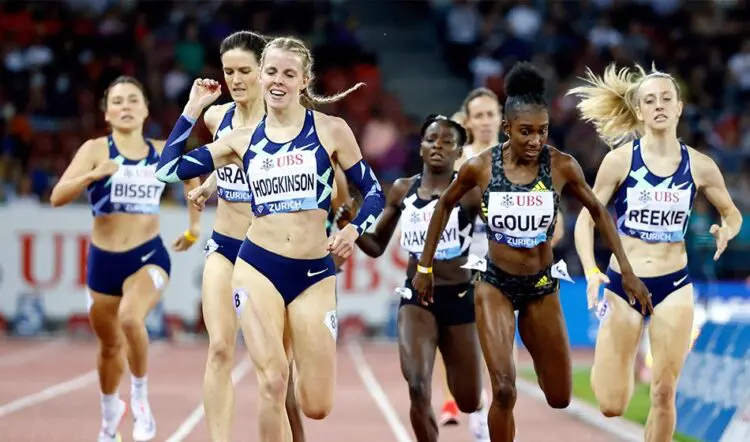
In the Brussels 800m, Olympic silver medallist Keely Hodgkinson narrowly lost to Natoya Goule and the Zurich race looked like following a similar pattern. Noelle Yarigo led through 400m in 57.11 before Goule took command down the backstraight and reached 600m in 1:28.63, with Hodgkinson on her shoulder and Jemma Reekie clawing the inside and shortest route.
Also as in Brussels, Goule eased back a little on the final bend and kicked in the final straight again but this time Hodgkinson was closer, had not run as wide and was able to ease past to win comfortably in 1:57.98, with Kate Grace catching Goule as both ran 1:58.34.
Reekie maintained her consistency with fourth in 1:58.61, again beating world champion Halimah Nakaayi (1:58.89) and 1:56.71 performer Habitam Alemu.
Keely Hodgkinson wins in Zurich (Getty)
To the relief of Britain's other 800m runners, Hodgkinson's third-fastest time ever sealed her World Championships place for next year and leaves three qualifying spots remaining. She said: "My aim here today was to win and it was not going to be easy with a field which is very strong. I just wanted to make sure I gave it my all.
"It was my last race [of the season], so I think I did that, and to come home with a win, it's the icing on the cake really. Now I am going home and I am going straight on a plane [to Greece], and I am not going home for 10 days. I don't want to see a track for those 10 days and I am leaving my running shoes at home."
“This season’s been crazy and I couldn’t be happier really. I feel like I had the strength in the last 150m [tonight] and it was a good race!” @keelyhodgkinson reflects on a spectacular 2021. #WDLFinal 🇨🇭 pic.twitter.com/wnvWUopDK6
There were no records in the women's 1500m, though the final 300m of 42.92 was one of the fastest ever as the world champion Sifan Hassan again did battle with the Olympic champion Faith Kipyegon.
Chanelle Price did her usual good job of 63.32 at 400m and 2:08.94 at 800m but had to slow down as clearly no one was interested in the advertised 2:06 pace. The field slowed even more through 1200m, in 3:15.41, before Kipyegon picked things up considerably with Hassan looking strong on her shoulder.
As they came into the straight, it seemed like the Dutch athlete might get by but the Kenyan showed her usual determined finish and eased away in the final 10 metres to take first in 3:58.33 to the Olympic 5000m and 10,000m champion's 3:58.55.
Kipyegon was second to Hassan in Doha in 2019 and lost to her rival in her opening 1500m in Florence this year but, just as in Monaco and Tokyo, she proved herself the best current or indeed greatest ever 1500m runner with her last 200m of 28.0.
"I knew it would be a tactical race today and we gave the leading girl a big gap," said Kipyegon. "I was controlling the pace in front. I was confident that in the last lap I could do better and it worked. This is my second Diamond League Trophy and my first as a mother. I won almost all my competitions including the Olympic final."
Hassan said: "Faith is really one of the greatest athletes and I wanted to give everything in my last race. This year I struggled with my training, I could not go to the US. Next year, I will train my speed and I will be amazing."
Josette Norris, who ran the 5000m in the US Olympic Trials where she placed eighth, continued her great post-Olympic form by easily being the best of the rest with third place in 4:00.41. Katie Snowden was ninth in 4:06.48.
The women's 100m hurdles provided another track highlight with three of the top four setting PBs.
Nigerian Tobi Amusan won in an African record 12.42 (0.4) and the Olympic fourth-placer beat fifth-placer Nadine Visser's Dutch record 12.51. Megan Tapper was third in 12.55 ahead of Payton Chadwick's PB 12.62, with Britain's Cindy Sember a solid fifth in 12.71.
The women's 400m started the track final programme and it featured an exciting four-way race for the title. It seemed that the reward of a guaranteed World Championships place gave American champion Quanera Hayes the added stimulus of winning and her 49.88 – close to her 49.78 season's best – gave the Olympic seventh-placer a narrow win over Toyko silver medallist Marileidy Paulino's 49.96. Sada Williams was third in 50.24, just edging Stephenie Ann McPherson's 50.25.
The women's steeplechase was also competitive, with six athletes together at the bell. The first kilometre was run in 3:00.23 though the pace dropped and Norah Jeruto was ahead at 2000m in a slow 6:08.10.
On the last lap Jeruto, who missed the Olympics, maintained her unbeaten record with a very strong last lap to win by around eight metres in 9:07.33.
Hyvin Kiyeng, the Olympic bronze medallist, looked in contention until the final water jump but landed flat-footed and effectively lost her eventual final margin to Jeruto as she went deep in the water. However, she did well over the final barrier to repel the challenge of Tokyo runner-up Courtney Frerichs – 9:08.55 to 9:08.74.
Olympic champion Peruth Chemutai was seventh in 9:20.16, equalling her Diamond League best of the year.
In the 400m hurdles, Femke Bol resumed her battle with Shamier Little and again it was the Dutchwoman who came out on top as she set a meeting record 52.80. Little looked menacing as she hit the straight level but Bol, keeping her form superbly, eased away to win by half a second from the American's 53.35, with Anna Ryzhykova's 53.70 beating compatriot Viktoriya Tkachuk's 53.76 PB.
Bol said: "Before the race I made a plan with my coach to get a good time and win with the meeting record and I got both. On the last 100m I was full of lactic acid, I had to push so hard. I wanted to win so badly, I heard the crowd cheer. It gave me so much energy.
"It is great to run such a time this late in the season. It is amazing – I won all the Diamond League meetings and I won here. My season is really a dream! Everything I could dream about came true this season."
To read about day one of the Diamond League finals in Zurich, CLICK HERE
» For the latest athletics news, events coverage and updates, check out the AW homepage and our social media channels on Twitter, Facebook and Instagram
Gout Gout prepared for the world stage
Teenager who is being billed as "the next Bolt" says he is "ready to rumble" in Tokyo.
He still shares a room with his older brother. He owns a Hyundai i30, not just because he likes the way it looks but because it has “good fuel economy”. He’s a straight A student with a keen interest in studying sports psychology when he goes to university.
Oh, and he’s also being billed as sprinting’s next great superstar.
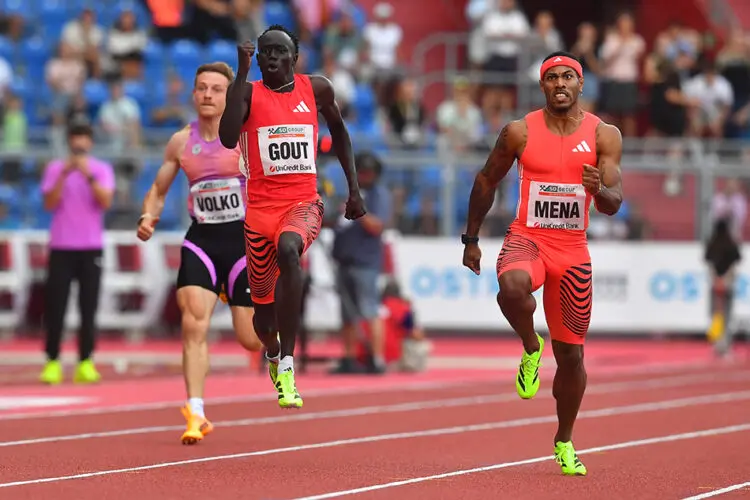
While they already know all about him in Australia, the world at large is about to get its first glimpse of Gout Gout on the senior global stage. The 17-year-old Queenslander has already taken great strides in his short career – breaking the Australian record that had stood since the 1968 Olympics and also winning the senior national title – but how he negotiates this next big step will make for fascinating viewing.
In the latest issue of AW magazine, Australia’s legendary Olympic sprinter Cathy Freeman described his style perfectly. “I had a little chuckle because he looked either like he was running downhill or that he’d been fired out of a cannon,” she said. “He just has so much raw talent and you can’t deny that. He’s exceptional. It’s captivating.”
Gout has had a recent growth spurt, and now stands at 183cm (six feet) tall, but he will be mixing it with the big boys now in Tokyo. At 8.43pm Japanese time on Wednesday, the Ipswich Grammar school student will step out into the truly elite arena as the heats of the men’s 200m get going and the attention intensifies.
“I’m meant to be here,” says Gout. “[There are] obviously a few butterflies but, of course, I've done the work.”
(Getty)
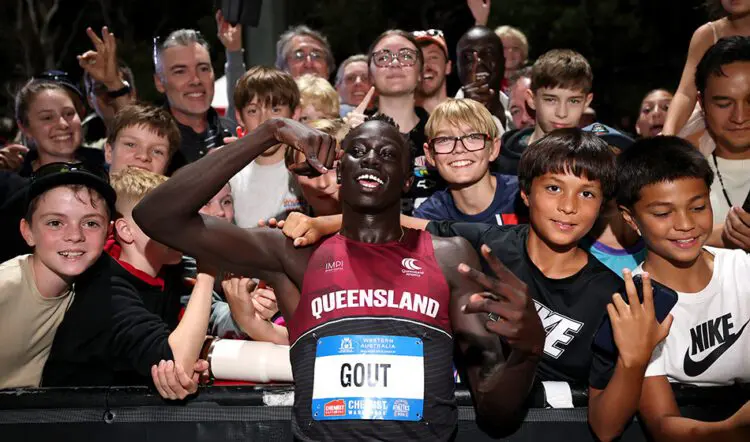
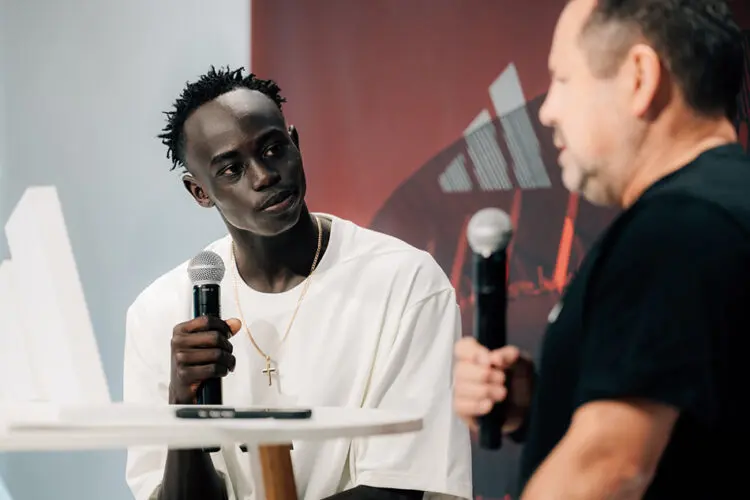
He is already famous in his home country, mobbed at every event in which he competes on Australian soil. “It's definitely crazy,” he added earlier this week at a Q+A event with his sponsors Adidas. “I've had grandparents come to me wanting photos, and people as little as two, three years old. I've [also] had a baby [handed towards me], and her mother wanted me to sign her forehead. It's definitely surreal.”
The attention has arrived thanks to his prodigious talent but it seems unlikely, given his support network, that he will be allowed to get ahead of himself, or let the hype seep in. Gout is coached by Di Sheppard, who has taken him from his early stages through to this level, while his parents, who are from South Sudan but migrated to Australia in 2006, have instilled “focus and motivation, integrity and confidence” in their son.
There are other siblings – an older brother, older sister, plus three younger sisters and a younger brother “he says he wants to be faster than me” – to keep him in check. Friends, too.
“I've had the same mates since I was in grade seven, so they treat me the same,” he added. “Some of them don’t know how good I am sometimes.” That might change in the coming days.
Gout Gout (Getty)
For Gout, success in Tokyo would be a PB. The articulate young man might possess incredible speed in his legs but he is learning to pace himself.
“Balancing ambition and telling myself it takes time is definitely something important,” he said. “I struggled a bit during the start [of my career] but now I know that things don’t happen overnight. I’m only 17. These guys have 10, maybe 15, years on me, so [it’s a case of] telling myself that my time will come.”
(adidas)
As if to underline just how much time he has to play with, after this Japanese adventure Gout will return to school. There are exams to prepare for.
His major sporting targets next year will be the World Under-20 Championships in Oregon, while there are also plans to race at a few events on the professional circuit but already there is a feeling that he is on a path set for a very special destination.
When they migrated, Gout’s parents had the choice between Canada and Australia. Now, their son could well be the face of the 2032 Brisbane Olympics and even he admitted there is a sense of destiny around the quirk of fate that led to Queensland.
His destiny for this week will soon become clear, too. Asked, if his legs could talk, what they might say to him ahead of his world championships bow? Gout replied: "I think they'll be really good. It’ll be like F1. You know when the cars are really warming up the tyres? I think they'll be exactly like that. I think they'll be just ready to rumble. Ready to run.”
The world awaits.
From odd jobs during Covid to global gold in Tokyo
Sprint hurdler Cordell Tinch succeeds Grant Holloway as world champion with a dominant display.
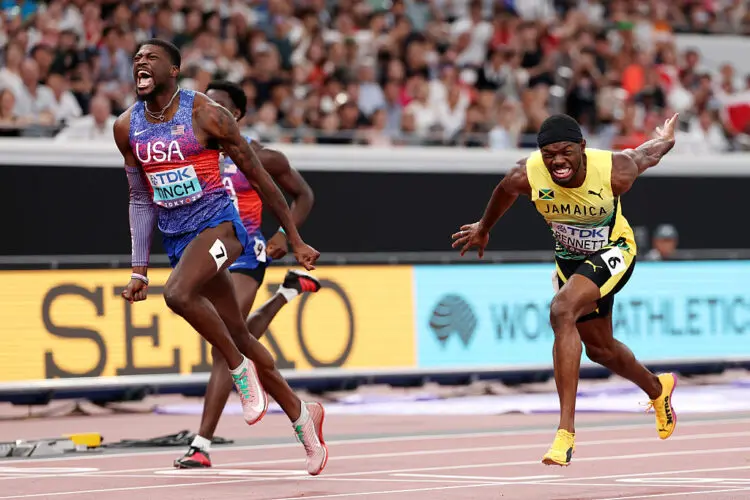
Cordell Tinch spent the pandemic period selling mobile phones and installing machinery that made toilet paper. Since returning seriously to athletics in 2023, though, he has enjoyed a meteoric rise and on Tuesday (Sept 16) won the world 110m hurdles crown in Tokyo.
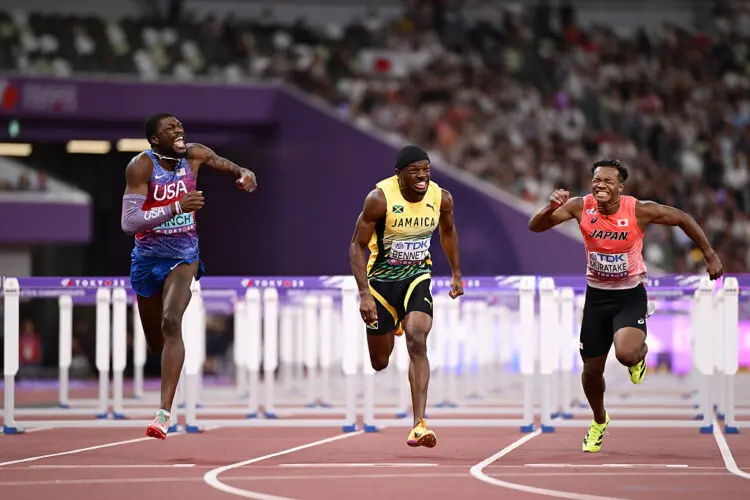
The 25-year-old from Wisconsin clocked 12.99 (-0.3) as Jamaican duo Orlando Bennett and Tyler Mason came second and third in 13.08 and 13.12 respectively.
Enrique Llopis of Spain was fourth in 13.16 with home nation hope Rachid Muratake receiving the biggest cheer of the night as he finished fifth in 13.18.
Grant Holloway, who has been dominant in this event in recent seasons, has not found his form this summer and was only sixth in his semi-final with 13.52.
Cordell Tinch (left) beats Orlando Bennett (centre) and Rachid Muratake (Getty)
Tinch was a promising sprint hurdler and NFL player during college but had a three-year break from track where he did a series of odd jobs before finally returning to athletics.
He failed to make the US team last year by one place but this year it was his turn to shine and he took the opportunity in style.
"When I crossed the finish line I felt relieved," he said. "I came into this season with the goal of winning the world title. I wanted to be the best hurdler in the world.
Cordell Tinch (Getty)
"Keeping the medal with America is fantastic. I stepped away from the track for a couple of years but I am not regretting it at all. If I hadn't taken that break from the track, I wouldn't be a world champion now. Everything I learned at that time away from the sport made me the man I am and a world champion.
"There are ups and downs, but at the end of the day you get what you're supposed to get. Being the only one to run sub-13 today makes me happy. I believed I was the best out there, so I didn't feel any pressure. People expected me to panic but I stayed focused.
"I don't think any hurdler will tell you can run hurdles perfectly, unless it's 12.79. I don't think it was a perfect race but it was the race I needed to get the job done."
Hamish Kerr continues New Zealand’s success with high jump win
Olympic champion wins his first-ever world high jump title, while Ethan Katzberg breaks championship record in men's hammer throw.
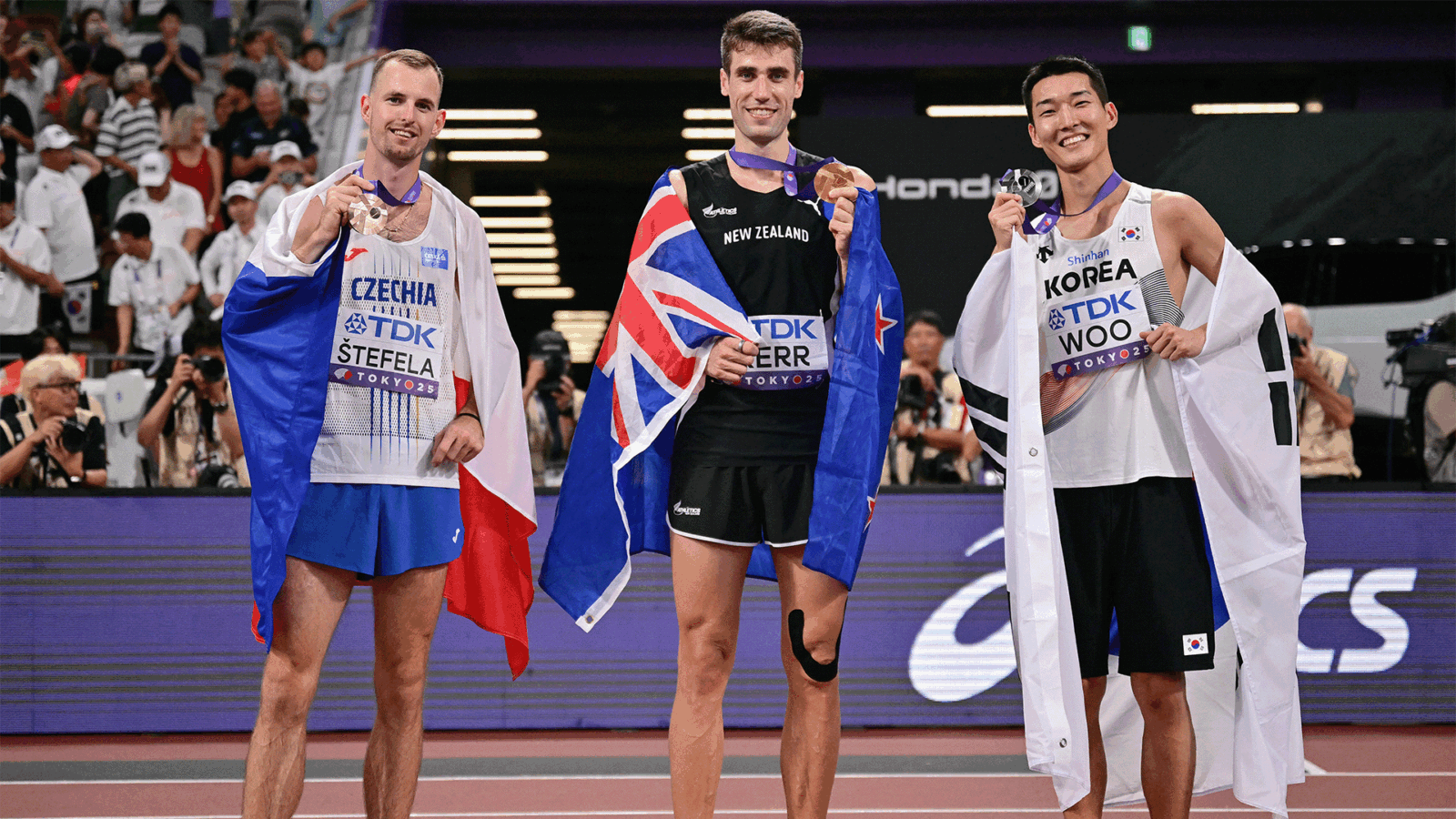
Hamish Kerr secured his first gold medal in the men’s high jump final at the World Athletics Championships on September 16, clearing a world-leading 2.36m in a closely contested competition that came down to fine margins.
With 2021 Olympic champion Gianmarco Tamberi failing to make it out of qualifying, one podium spot opened up - but the competition remained strong, with several athletes in contention for the medals.
By the time the bar reached 2.34m, just four athletes remained: Kerr, South Korea’s Sanghyeok Woo, Jan Stefela of the Czech Republic, and Ukraine’s Oleh Doroshchuk.
At that stage, none had managed a first-time clearance, and it appeared Woo could take the title based on a cleaner card if no one managed to go higher. But on his third attempt, Woo got over 2.34m to keep himself in the running.
Jan Stefela, Hamish Kerr & Sanghyeok Woo (Getty)
Kerr matched him moments later, also clearing on his final attempt to stay in contention for gold. Stefela exited the competition at 2.34m and secured bronze, while Doroshchuk placed fourth on countback.
When the bar moved to 2.36m, Kerr was the only athlete to go clear - doing so on his first attempt and setting a new world lead in the process. Woo was unable to respond, confirming Kerr as the new world champion.
The result marked a significant milestone in Kerr’s career, having never previously made a world championship final. It also added to a successful few days for New Zealand, following Geordie Beamish’s historic 3000m steeplechase title the night before.
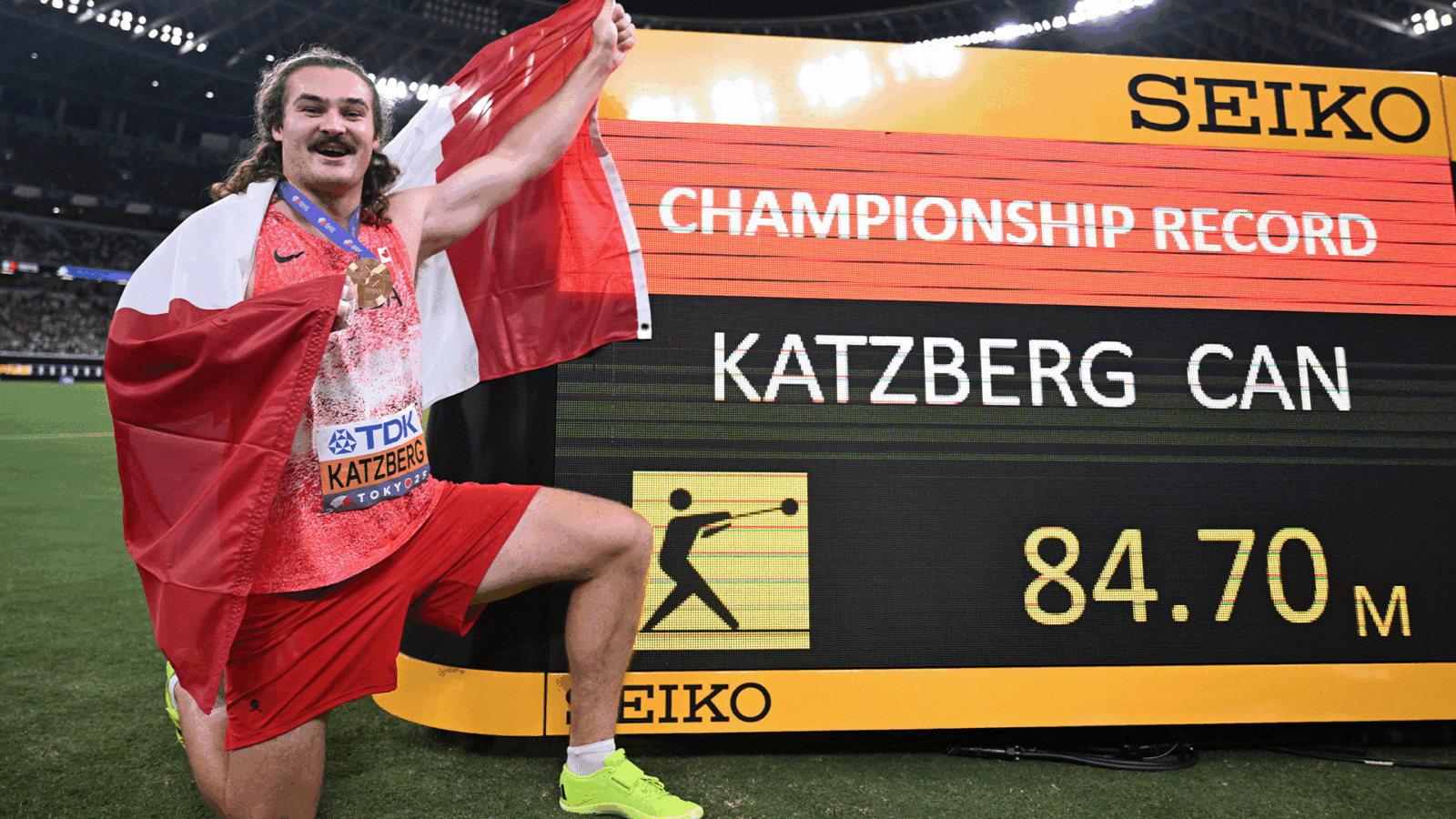
Ethan Katzberg successfully defended his world hammer throw title in Tokyo with a dominant series of throws, highlighted by a championship record and personal best of 84.70m.
Ethan Katzberg (Getty)
The Canadian took control of the competition from the start, opening with 82.66m to move straight into the lead. He went on to throw over 80m in all six rounds, with clear consistent form throughout.
With no one able to get close to him, Katzberg improved his lead in the fourth round with his best-ever throw of 84.70m.
He said: "I can't ask for much more. The whole field was gunning for it and these were incredible results with four guys over 80 metres. That really pushed me to get the result that I had today.
"I am two metres away from the world record but I am getting closer. I will continue to push myself and push the limits of what I can do. It took a lot of hard training for this personal best. After 84.70m, I was really trying to go for it. There was no point I thought of doing any less.
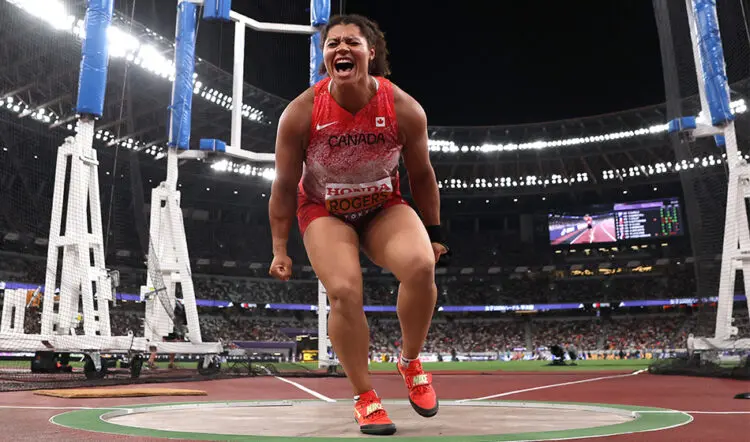
"Camryn Rogers put the pressure on me to perform tonight. I watched her win the women's (hammer) final. It was an incredible performance from her, so for Canada to win the men's hammer tonight as well is amazing."
Germany’s Merlin Hummel threw a personal best of 82.77m to take silver, a strong performance for the 23-year-old in his first senior global final. Hungary’s Bence Halász claimed bronze with 82.69m but appeared disappointed at the end, having taken silver at the Paris Olympics earlier this year.
Ukraine’s Mykhaylo Kokhan produced a personal best of 82.08m for fourth, just missing out on the podium. American record-holder Rudy Winkler had a difficult competition, recording four fouls and finishing fifth with a best of 78.52m.
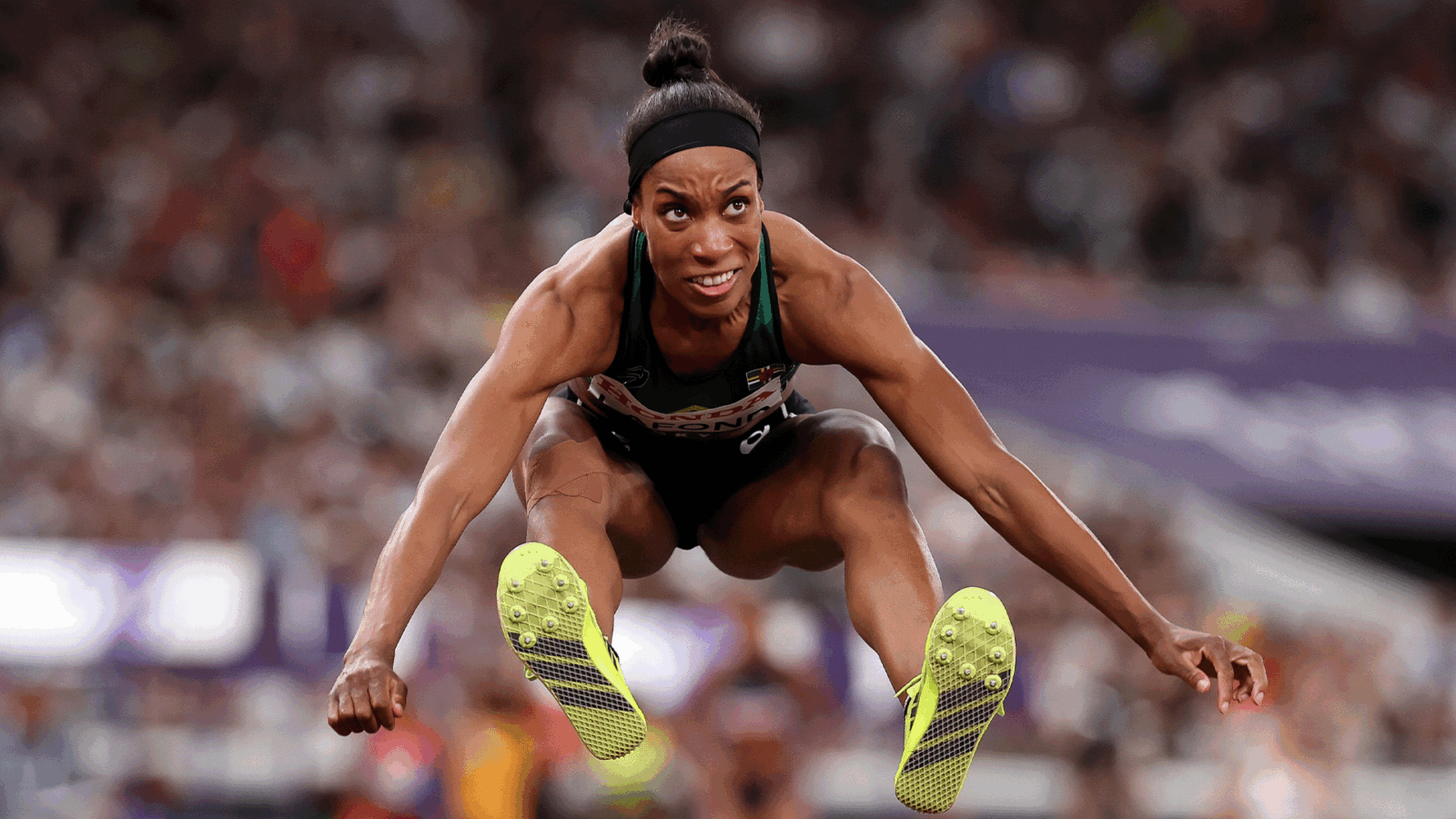
Thea LaFond (Getty)
Yulimar Rojas made a successful return to competition in the women’s triple jump qualification round, easing through to the final in her first appearance since March.
The Venezuelan, a four-time world champion, has been absent for over a year with an Achilles injury and had not competed since the 2024 indoor season. But she made an immediate impact in Tokyo, jumping 14.49m on her first attempt comfortably beyond the automatic qualifying mark of 14.35m.
Joining her in the final will be Cuba’s Leyanis Pérez Hernández, the world bronze medallist, who recorded the longest jump of the day with 14.66m. Paris Olympic champion Thea LaFond of Dominica also advanced, landing 14.40m in her best effort.
LaFond said: "Qualification went exactly as planned. I didn't want to spend too much energy here. One and done. I love that. I have a tendency to foul my first jumps so now I'm definitely happy. I'm just keeping it simple, trying to execute the pieces to the best of my ability. If I do that really well, the medal's going to come.
"I'm not trying to fixate on the medal, just on the what I can control. Of course, I want another 15m jump. But I'm not chasing marks, I'm just chasing big hop steps. Huge hop steps in the final."
McLaughlin-Levrone runs US 400m record in world semi-final
American clocks 48.29 as Amber Anning finishes runner-up behind her in a swift 49.38.
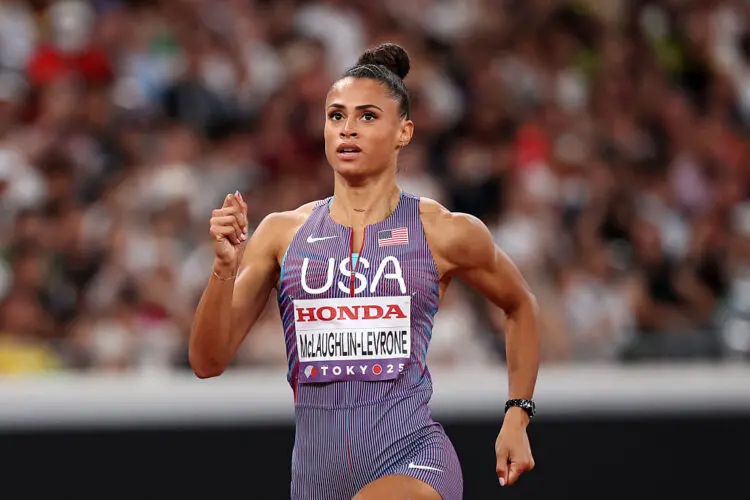
Sydney McLaughlin-Levrone smashed the American 400m record while Amber Annning came close to beating her own British record in some red-hot semi-finals on Tuesday night at the World Championships in Tokyo.
McLaughlin-Levrone has switched from 400m hurdles to 400m flat for these championships and it looks to be paying off as she scorched to 48.29 to beat Sanya Richards-Ross’s US record of 48.70 from 2006.
McLaughlin-Levrone, 26, is now No.7 all-time in the event as she beat her own PB by 45 hundredths of a second.
Sydney McLaughlin-Levrone (Getty)
Anning, meanwhile, finished strongly to be runner-up in the same heat in 49.38 and she will look to beat her 49.29 UK record in the final.
McLaughlin-Levrone said: “This race definitely gives me confidence for the final. I just want to go out there and execute well again. I didn't expect to run this fast today. I still have more to show. I feel strong and good, and have confidence in my fitness. I will give everything I have in the final."
Anning said: "It's my best race of the whole year. I was grateful, very happy and executed it. I think my confidence was there, which is something I've been missing this year. But I put it all together today. It was about having faith in my ability.”
Salwa Eid Naser, the 2019 world champion from Bahrain, was another semi-final winner in 49.47, while reigning champion Marileidy Paulino of Dominican Republic was passed in the final strides in her semi by Natalia Bukowiecka as the Pole won in 49.67.
There was no luck for Anning’s team-mates Yemi Mary John and Victoria Ohuruogu, though, as they clocked 51.51 and 51.65 respectively to finish last in their heats.
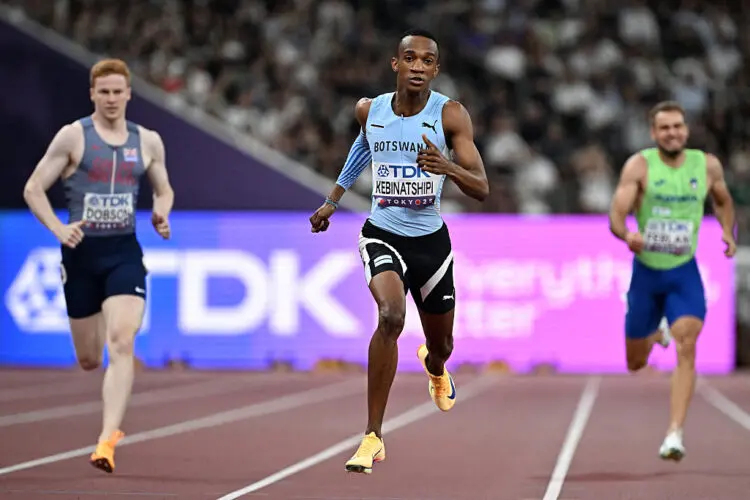
Charlie Dobson and Busang Collen Kebinatshipi ((Getty)
Botswana athletes were in inspired form in the men’s 400m semi-finals as Busang Collen Kebinatshipi led the qualifiers with a world leading 43.61. He will be joined in the final by two team-mates, too, as Bayou Ndori clocked 44.21 and Lee Eppie 44.51.
The British men went out, though. Matt Hudson-Smith, the Olympic silver medallist, finished sixth in his heat in 44.95. Charlie Dobson was seventh in his heat in 44.85 but said overall his season had been a success with a London Diamond League win where he ran a big PB of 44.14.
Sam Reardon was eliminated after clocking 45.10 for eighth in his heat.
Formidable Faith Kipyegon makes it four in Tokyo
Kenyan great strides to a quartet of world 1500m titles with another show of dominance.
Never in doubt. While one of the recurring themes of the world championships in Tokyo has been shock results, it didn’t apply to the women’s 1500m final on Tuesday night (September 16).
When Faith Kipyegon stands on the start line of a metric mile race, there is usually only one outcome – and so it was again as she toyed with her opposition and then left them for dead with a show of control and, latterly, speed.
The world record of 3:48.68 she set earlier this year did not come under any threat in Japan but the Kenyan was in total control, winning the fourth world 1500m title of a career that only grows in stature with every passing year.
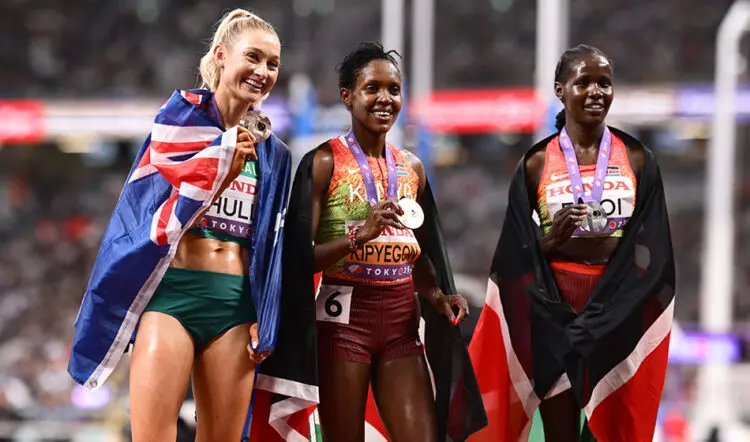
She hit the line in 3:52.15 at the national stadium while, behind her, there was an incredibly tight battle for the other podium spots that was won by her team-mate Dorcus Ewoi, whose PB of 3:54.92 took her to silver just ahead of Australia’s Jess Hull (3:55.16). Nelly Jepchirchir almost made it a Kenyan clean sweep of the medals, but her PB of 3:55.25 came up painfully short. US champion Nikki Hiltz was fifth with 3:57.08.
Kipyegon led from start to finish, but the pace wasn’t searing in the earlier stages as she went through 400m in 63.96 and 800m in 2:07.27, tracked every step of the way by Hull and Jepchirchir. The only hint of a threat to her dominance arrived at the bell, when Jepchirchir surged and briefly moved into second place. Hull rapidly covered the move and Kipyegon raised the pace.
The three-time Olympic champion over the distance made her crucial gear change entering the final bend and, though Hull tried to stay in touch, the gap between first and second only grew while Jepchirchir and Ewoi closed in on the Australian, who clung on to bronze as she practically fell over the finish line.
(Getty)
Kipyegon is now just the second woman to win four world titles in the same track event (Shelly-Ann Fraser-Pryce has five in the 100m) and will turn her attention to the 5000m in Tokyo.
"Being able to defend my title and to win a fourth gold feels really special,” she said. “I knew I could run it under control. This sport drives me. I need to push myself in order to be the best.
"I won here in 2021 [at the Olympics] just after becoming a mother, so being back here, winning again, means I can show a new gold medal to my daughter. I want to win two golds here in Tokyo.”
She added: "This event is not easy to win every time, to win every year and break records. It is a matter of dedication, hard work and being passionate. I am so grateful I am doing this every year. This was my dream – to keep making history.”
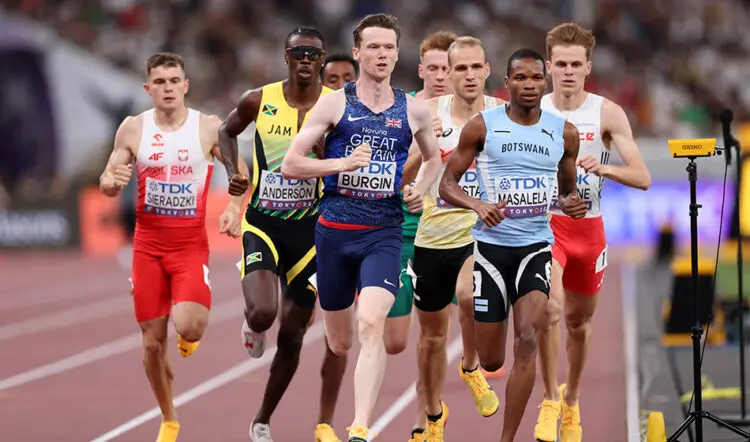
In the qualifying heats of the men’s 800m, US champion Donavan Brazier qualified fastest for the semi-finals by winning the final race in 1:44.66, while Great Britain’s Max Burgin was second-fastest with his run of 1:44.73 as nine athletes broke the 1:45 barrier. Kenya’s Olympic champion Emmanuel Wanyonyi safely progressed with 1:45.05, as did defending champion Marco Arop (1:45.39) and Olympic bronze medallist Djamel Sedjati (1:45.01).
The 2023 world bronze medallist Ben Pattison was another qualifier in 1:46.51, while his fellow Briton, Tiaran Crorken ran 1:45.63 but didn’t progress on his world championships debut after coming fifth in his heat. Another new face – US teenager Cooper Lutkenhaus – also saw his competition come to an abrupt end after his run of 1:47.68.
Max Burgin: "You've got to credit Emmanuel Wanyonyi"
British 800m champion eyes World Championship success in Tokyo after a strong and consistent season.
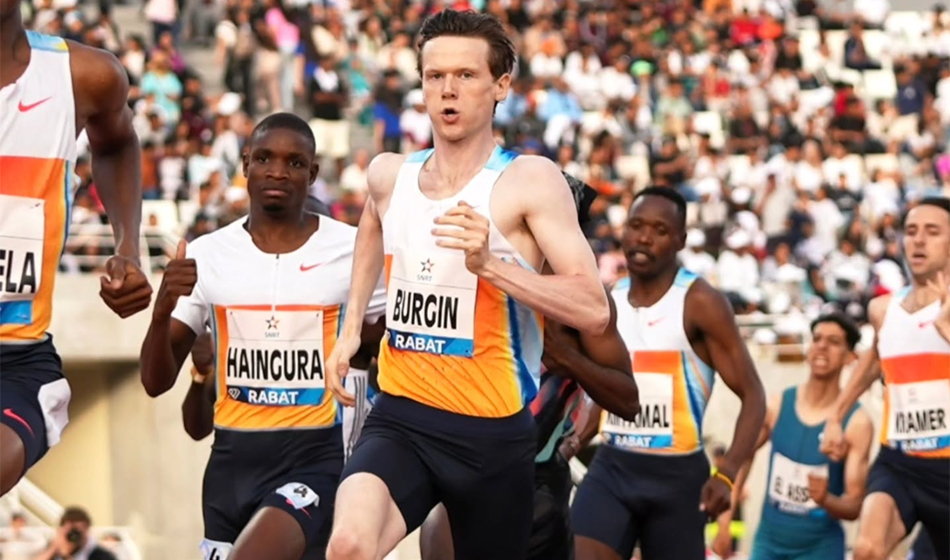
Max Burgin has spent most of the 2025 season racing the best in the world – and beating many of them. The 23-year-old heads into the World Championships in Tokyo on Tuesday (Sept 16) as one of the leading 800m runners on the circuit, with a personal best of 1:42.36 and a growing sense of confidence.
Much of that confidence, Burgin says, comes from how the event itself has shifted in the past two years, particularly because of the way Olympic champion Emmanuel Wanyonyi has changed the way the 800m is being raced.
“I think you’ve got to credit Wanyonyi for creating these races,” says Burgin. “Having a person in that race, who's going to drag you round and set that race up makes those times and drags others round to these times.
“In our event, how Wanyonyi often approaches championships means that the races go quite similarly either way. Now obviously that could change. He could change that and if he does, I think it would be a considerably different race because there’s not too many other front runners in the mix at the moment.”
It’s a style of racing that Burgin has welcomed and adapted to. He was right in the mix at the Diamond League final in Zurich, finishing just behind Wanyonyi in second place and proving to himself that he belongs at the top of the event.
Max Burgin (Diamond League)
“Zurich was the first time this season that I've really felt like I had a proper chance of winning,” he says. “Had things gone slightly different, I think I could have [won]”
Zurich was one of this year's strong performances for Burgin, who has finally been able to string together a full year of healthy, consistent racing - something that hasn’t been possible for him in a long time.
“It’s been a great season, consistency-wise,” he says. “My first one since probably 2018 that I've actually managed to have a full season and hit pretty much every race I wanted to.”
That progress hasn’t come from any major change in training approach, he says, but more from managing the long-running injury issues that have interrupted his last few years. The Olympic finalist was forced to withdraw from the 2022 World Championships in Eugene due to DVT (deep vein thrombosis) and most recently has struggled with a sural nerve issue that has now been treated.
“That’s mainly been managed this year and sorted through a few series of stripping injections that I've got over the winter. I also have more knowledge of how to avoid setting it off. It's been a case of those things becoming resolved and me being able to actually train the way we wanted to train.
Max Burgin (David Lowes)
“That winter after Eugene was probably the lowest point I've had in athletics,” he says. “I’d had a few years of hamstring injuries before that but then I got that DVT and throughout that winter, I started developing the Achilles problem as well. That combined with the second year of uni all seemed quite a lot at that time and I'd say that's probably the closest to finishing off and thinking that I can't do this, that I've ever got to.”
But even in that dark period, he kept going. He said: “One of these days you will have a season where you don't have an issue like that and you can afford to push through these seasons, you just need to hang in there and still treat it like a career. I'm grateful to have finally made it through to three years later.
“I think that I’ve known for years now that if I could string more training together than I've been managing and more races as well as get that experience, that I'd be able to show a much better standard of performance,” he says. “So I wouldn't say for me running 1:42 this year has been a surprise. It was very much a target, very much something we expected and hoped to do."
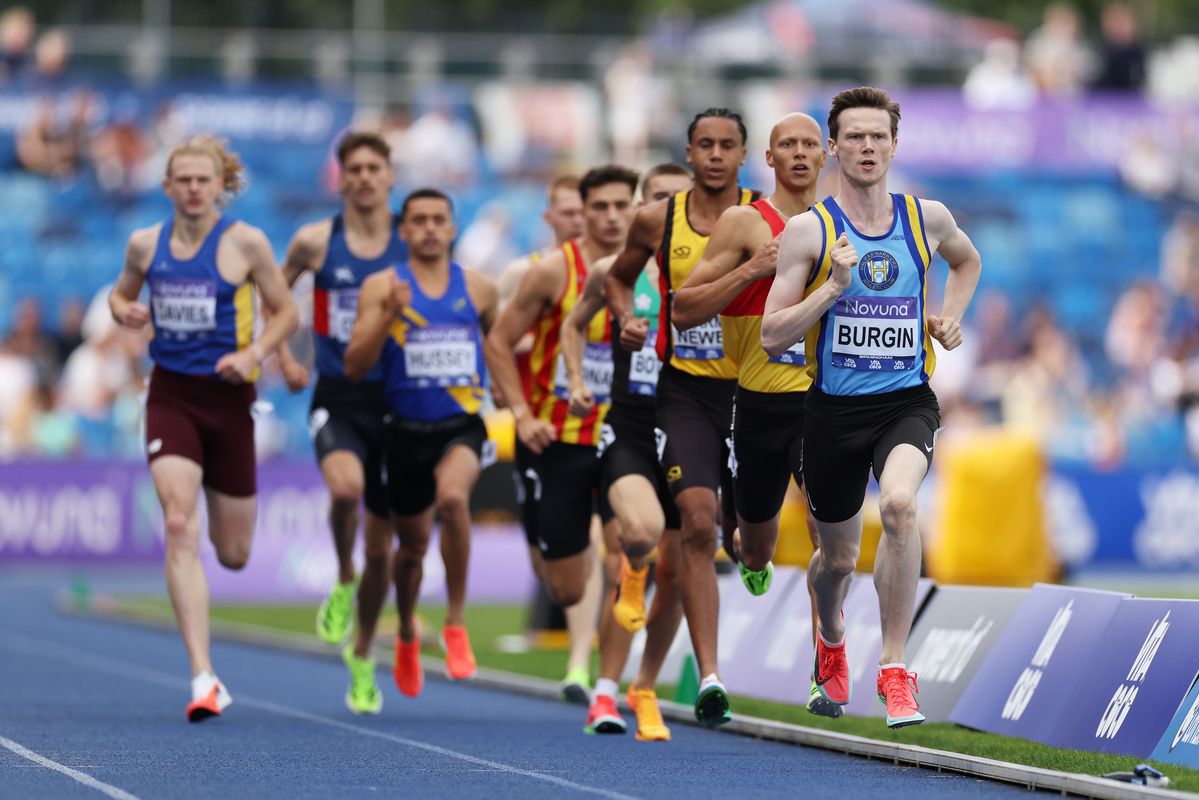
Burgin has also used this season to refine his race tactics. Known early in his career as a fearless front-runner, he’s found that sitting back is sometimes his best option.
“On a global stage, I've had to change from front running because it's just not necessarily feasible or the best thing to do when these races are often running at 1:42 low and a few 1:41s,” he explains.
“Earlier in the season I was trying to run more in the pack. I was trying to run a more even-paced first lap. But that wasn’t really working for me. I was getting too bashed around in the midst of the pack in fifth and sixth, not really able to get out.”
Max Burgin (Getty)
After Monaco, where he finished last, Burgin made a tactical adjustment.
“I decided to go out and run the first 200m [in Zurich] a lot faster and really fight for that second place spot,” he says. “Still not front running but not getting caught up where I don't want to be. I think that has emerged as my number one tactical option at the moment.”
Burgin’s coaching setup remains at where it began - with his father, Ian, who has coached him since Burgin was 14.
“Having my dad in that coaching role, it's someone who's going to have the patience to get through all the setbacks, someone who's obliged to stay there and stick it out with me. I can’t think of a better way to put it than someone you can't get away from,” he jokes.
Ian has never coached another athlete and, according to Max, he likely never will.
“He stresses enough about me. He wouldn't enjoy working with other people. But that doesn't mean that he doesn't have the required knowledge or experience to do more coaching.”
Max Burgin (Getty)
Inevitably, comparisons arise with another famous father-son coaching duo: Seb and Peter Coe. Burgin is now within reach of Coe’s British record of 1:41.73.
“It feels very much within touching distance,” he says. “Whether it'll be something I could run at this championship, I don't know. Championship running is not always the best place to go chasing times but it's something that feels very much achievable now for me.”
Now, as the World Championships have arrived, Burgin is where he’s always believed he could be.
“It does feel like I’ve come through a rough patch and I've clawed my way back to where I was.”
Burgin will race in the men's 800m heats on September 16, at 11:35am BST.
A lap with Ben Pattison
We speak to the world 800m medallist about building work and bouncing back from injury
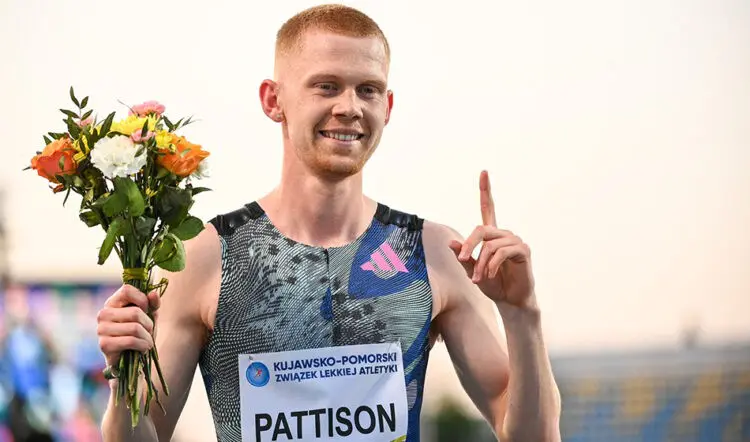
After an uncertain start to the year, the hard work has paid off for Ben Pattison. Following knee and quad pain during winter training stints in both Flagstaff and Potchefstroom, the 2023 world 800m bronze medallist suffered a stress fracture in his femur, resulting in him being in crutches for a fortnight.
But, such was his enthusiasm to get back to full fitness that, on top of aqua jogging, cycling and cross-training, the 28-year-old built a log cabin in his Loughborough back garden when he was injured.
“That’s now my new home set-up,” he says, reflecting on a tough period. “I got a cross-trainer from eBay for about £150. I’ve got a Zwift bike in there and a treadmill as well. My parents came up and helped me build it.
“It was quite a stressful two weeks constructing it but you have to invest in yourself. So I thought: ‘I’ll get this done’. It’s genuinely been life-changing and it just means that I can stop when something hurts, whereas if I had pain out and about I’d have to run or walk home. If that’s three miles away, for example, then it’s more problematic.”
Ben Pattison (Getty)
Pattison opened up his 2025 season with a time of 1:47.09 over 800m at Meeting Stanislas Nancy in France on July 4, before he reduced his season’s best to 1:46.08 at the London Diamond League.
He undertook his biggest training week since December in the immediate build-up to London and, after running 1:46.82 in the heats at the UK Athletics Championships a couple of weeks later, felt like he was back to his old self.
A frustrating final followed, however – Pattison clocked just 1:51.58 for ninth in Birmingham. Putting that performance down to “gut issues”, he knew he’d subsequently have to produce a statement run on the circuit to be in with a shot of selection for the World Athletics Championships.
Then came Budapest. On the same track that he secured world bronze two years ago, Pattison ran 1:44.14, a mark that was not only under the automatic qualification standard for Tokyo [1:44.50] but also the third quickest by a Brit this season [after Max Burgin and Henry Jonas].
Ben Pattison (Continental Tour Gold)
“I said to myself: ‘Just don’t give up’,” Pattison says. “I gave it absolutely everything in the last 200m. It was such a relief. Before, everyone had written me off and rightly so – I hadn’t done anything good enough to warrant selection.”
Pattison then backed up his time in Budapest with a dramatic win over Jake Wightman in the 800m at the British Milers’ Club meeting in Tooting Bec. Just one hundredth of a second separated the pair as they clocked 1:45.07 and 1:45.08 respectively.
“I ticked off the time in Budapest but I then needed to show the selectors that I could beat these calibre of guys,” Pattison says. “When I saw Jake had entered I thought: ‘If I beat him that’s a good sign’.”
“I know I've always been able to race well. I’ve just learnt to enjoy the moment and take the opportunities.”
Pattison will now get the chance to stand on a global podium once again, joining Burgin and Tiarnan Crorken in Tokyo.
Given Pattison’s best is 1:42.27 – second to only Seb Coe on the UK 800m all-time list – write him off at your peril in the Japanese capital.
“I train to compete at the world level and I’ve been there before, so I know what it takes. One of my main targets this year was to actually break the British record [1:41.73]. Maybe that will happen next season but there are going to be some very quick races in Tokyo.”
If you could choose one person to train/compete with, past of present, who would it be and why?: I think my ideal training partner would be Marco Arop. He’s such a nice guy and we get along well. He would be great for the windy days as I could just sit in behind him. He also likes to take races on and I think that would be ideal for me. I’m not sure he’d be too happy about it, though, if I just sat on his shoulder all the time!
Busy weekend for British domestic distance runners
Far away from the World Champs in Tokyo, the road race scene in the UK has enjoyed a busy few days and the cross-country season is now underway as well.
WORCESTER CITY HALF-MARATHON, September 14
Nearly 2000 runners started the half-marathon and almost 5000 competed over the weekend be it in the main event or the 10km and relays.
Brighton Phoenix runner James Cook came out on top in the feature event in 68:03, half-a-minute clear of Andy Lawrence, as Julia Biji took the women’s half-marathon in 76:57, with W45 Kelly Edwards third in 79:55.
Charlie Jones and Lauren Kennard were winners in the 10km race.
Event founder Steve Cram said: “Once again, the Worcester City Runs delivered the goods. The event has grown year on year, which has been brilliant to see. That creates logistical challenges, but Worcester always rises to those.
“We have excellent sponsors and partners and an army of great volunteers who make it possible to stage this event. The runners and spectators turn out every year to create a wonderful atmosphere, so thanks to Sutcliffe & Co, Worcester City Council, and Worcestershire County Council and everyone else who made this possible and we can’t wait to do it all again next year.”
Overall (13.1M): 1 J Cook 68:03; 2 A Lawrence (Strat) 69:36; 3 R Haw (L Eaton, M40) 70:14; 4 A Lee (W Tempo, M40) 70:36; 5 B Harrison (Mil K) 71:13; 6 E Lynch 71:45
M50: 1 B Corleys (B’field) 72:30
M55: 1 S Mugglestone (Bide) 75:29; 2 D Parkin (Leeds) 75:31
M70: 1 M Sparkes (Yeo) 95:29; 2 P Hough (Shrop) 95:40
Women: 1 J Biji (Candy) 77:27; 2 E Smith (Charn, W35) 79:03; 3 K Edwards (Leam, W45) 79:55
W60: 1 M Millican (Stubb G) 94:22; 2 D Bouwer (Newark) 95:18; 3 R Baker (Camb H) 97:21
Overall (10km): 1 C Jones (W tempo) 31:22; 2 2 J Vaughan (B ir) 32;14; 3 J Fisher (SB) 32:19
M50: 1 M Thomas (B Pear) 34:59
Women: 1 L Kennard (Worc) 36:42; 2 N Turner (Worc) 38:06
W55: 1 A Martin (Tewk) 44:59
FARRINGDON CROSS-COUNTRY RELAYS, Sunderland, Tyne & Wear, September 14
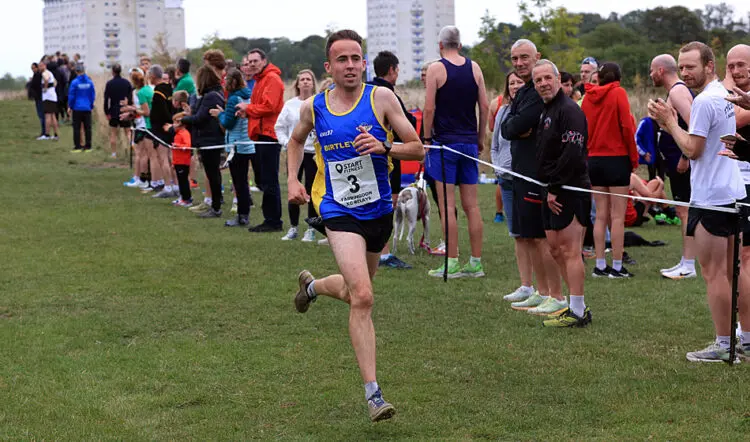
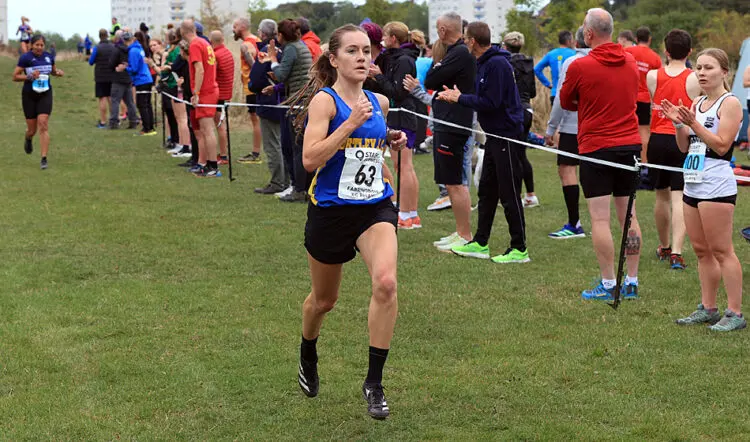
Birtley scored a double by taking both the senior men’s and women’s events but the women had to come from behind thanks to Lydia Turner’s fastest lap on the glory leg.
Adrian Bailes brought Birtley home in the men’s race after Lewis McConnel had overcome a first leg lead by Tyne Bridge’s Michael Hedley and posted the fastest lap in the process.
Adrian Bailes (David Hewitson)
Men (3x3km): 1 Birtley 26:49 (G Beevers 9:20, L McConnell 8:54, A Bailes 8:35); 2 Tyne Bridge 27:27 (M Hedley 8:59, T Charters 9:22, A Pratt 9:06); 3 Morpeth 27:35 (O Tomlinson 9:08, T Balsden 9:11, R Balmbra 9:14); 4 Sunderland 27:45; 5 Gosforth 28:41; 6 Heaton 29:34
M40 (3x3km): 1 Sunderland 29:14 (S Rankin 9:45, I Dixon 9:54, J Taylor 9:35); 2 Darlington 30:17; 3 NSP 31:18
Fastest: Taylor 9:35; A Foster (NSP) 9:48; N Allen (Birt) 9:54
Lydia Turner (David Hewitson)
Women (3x3km): 1 Birtley 32:10 (A Codling 12:03, A Leigh 10:54, L Turner 9:43); 2 Sunderland 32:23 (G Carroll 10:31, D Coulson 11:15, J Cox 10:37); 3 Crook 33;29 (S Attwood 11:03, B Iverson 11:21, A Etherington 11:05); 4
Fastest: Turner 9:43; Leigh 10:24; Fox 10:37
W35 (3x3km): 1 South Shields 34:38 (J Murdy 11:17, K Beard-Foden 11:48, A Day 11:33); 2 Darlington 35:42; 3 Tyne Bridge 36:29
Fastest: Murdy 11:17Day 11:33; S Teasdale (Darl) 11:45
Under 17 (3km)
Boys: 1 A Cook (Gate) 8:49; 2 T Hoole (Darl) 9:31; 3 G Bryce (Blyth) 9:34
Girls: 1 E Collingwood (Gate) 11:06; 2 G Carter (Durh) 11:20; 3 A Carr (Tyne Br) 12:03
Birtley AC winners (David Hewitson)
AMAZING NORTHAMPTON RUN HALF-MARATHON, September 14
Overall: 1 L Greer I(R&N) 67:07; 2 M Everett (R&N) 70:29; 3 N Gifford 71:39
M45: 1 D Dalmedo 76:10
M60: 1 J Darcy (Bucks & S) 86:45
M65: 1 B Whitehead (W’boro) 89:34
Women: 1 K Godof (Olney, W45) 82:57; 2 Z kemp (W45) 85:02
BUTTERFIELD GUERNSEY HALF-MARATHON, L’Eree, September 14
Overall: 1 R Weston (Guern) 71:48
M60: 1 G Merfield (Guern) 83:00
Women: 1 N Whitty (Guern, W40) 81:44
W45: 1 U Maisch 84:44
CHESHIRE HALF-MARATHON, Siddington, September 14
Omar Ahmed took his second race win of the month with a narrow win over Keighley & Craven’s Joe Hudson in 63:39.
The previous week, the Birchfield Harrier had won the Cardiff 10km, his fifth win over that distance this year, whilst his half win here was his third and second over this distance.
For Hudson, it was his first venture on the roads since 20;21 when a 14:05 in a Battersea 5km was about it, before a lot of races in the United States that included a 28:23.68 10,000 track outing.
So this was the first experience of the half-marathon distance for Hudson, whose 63:43 was a useful debut. This is quite unlike Ahmed who is now a seasoned campaigner over the distance.
It was a similar situation for women’s race winner Poppy Tank, who was also making her debut over the distance. Here, the BUCS cross-country runner up, who also took the students 5000m title this year posted a solid 73:20 to win by almost four minutes.
Overall: 1 O Ahmed (Bir) 63:39; 2 J Hudson (K&C) 63:43; 3 C Sarsfield (Helsby) 66:01; 4 M Parker (Hales) 67:20; 5 R Allen (Leeds) 67:55; 6 F Conway 68:08; 7 C Hannon (St Hel) 68:30; 8 J Carnelley (K&C) 69:11; 9 A Holliday (Border) 69:13; 10 R Brailsford (Wake) 69:23; 11 R Moore (Vale R) 70:03; 12 C Williams (Vale R) 70:04; 13 D Hawkins 70:08; 14 M Abshir (Leeds) 70:12
M45: 1 J Hart 71:19
M50: 1 J Lawler (High) 73:06
M65: 1 I Van Lokven (Mil K) 86:07
Women: 1 P Tank (Plym) 73:29; 2 A Lawson (Clap) 77:24; 3 E Navesey (Ptreston, W35) 79:04
W45: 1 L Brown (Dids) 88:23
W50: 1 H Taylor (Western, IoM) 94:15
W55: 1 K Wood (Stock) 96:38
CHIPPENHAM HALF-MARATHON, Wiltshire, September 14
Overall: 1 S Nott (Calne) 69:27
M60: 1 C Hann (Bitt) 87:13
Women: 1 C Baker (B&W) 76:29
W55: 1 J Rockliffe (W tempo) 85:16
W65: 1 P Mburu (Compt) 1:49:06
DEDHAM 10km, Essex, September 14
Overall: 1 O Adedji (NEB) 31:27
Women: 1 K Lea (Rocfford, W40) 40;25
W50: 1 W King (Chelm) 41:47
FELIXSTOWE COASTAL 10, Suffolk, September 14
Overall: 1 B Carpendale (Felix) 53:36; 2 O Rees (Ips P) 54:44
M55: 1 M Allen (Ips J) 61:49
Women: 1 R Nicholson (Waveney) 63:11
W50: 1 C Carter New J) 72:45
LAKE VYRNWY HALF-MARATHON, North Wales, September 14
Overall: 1 G Pugh (Merr’dd) 70:10; 2 A Jones (Merr’dd) 70:17; 3 C Gidlow (Stoke, M45) 70:30
M50: 1 G Wells (W Chesh) 77:08
M60: 1 S Watmough (Warr) 77:47
M65: 1 A Clarke 89:05
Women: 1 S Hawkins (Lawley, W45) 81:35
W45: 2 C Jacobs-Conradie (Merr’dd) 84:02
W50: 1 J Doughton (Buckley) 94:36
W60: 1 D Broom (Peni) 98:38
KENNY PHILLIPS 10, Cumbrae, Millport, West of Scotland, September 14
Callum Hawkins totally dominated to win by nearly six minutes in 46:44. The time was a personal best for the 2019 World Championships Marathon fourth placer and followed 10km victories in Glasgow and Paisley in the summer.
Overall: 1 C Hawkins (Kilb) 46:44; 2 P Mochan (Swin) 52:23; 3 J Downey (Kilm) 52:30; 4 W Ewens (Ayr) 52:57
Women: 1 E Peter (Vic P, Glas) 64:56
W60: 1 M McCord (Kirk’loch) 73:39
LIVERPOOL WOMEN’S 10km, Merseyside, September 14
The British Masters all-time W45 fastest, Kirsty Longley, took the award with a near three-minute victory in 36:56
Women: 1 K Longley (Liv PS, W45) 36;56
PLESHEY & ESSEX HALF-MARATHON, September 14
Overall: 1 P Coates (Brain, M40) 69:59; 2 N Harris-Fry (Orion) 69:36; 3 C Culham (Brain) 71:20
M50: 1 O Holmes (S’end) 75:51; 2 L Taylor (S’end) 75:51; 3 B Glasgow (Orion) 79:01
M55: 1 R Lowe (Harl) 80:11
M60: 1 O Dare (Witham) 81:14
M65: 1M Valbonesi (B’fleet) 88:51
M70: 1 D Butler (Bill’cay) 91:53
Women: 1 L Reed (Hav’g, W40) 76:57; 2 H McGowan-Jones (Vegan) 78:48; 3 H Leggett (Nuclear) 79;39
W40: 2 C Creek (Col H) 83:13; 3 R Bunting (Lon H) 83:30
STRATFORD HALF-MARATHON, Warwickshire, September 14
Overall: 1 S Pedley (B Stort) 70:46
Women: 1 F Stanyard (B&R, W45) 87:51
SWANSEA BAY 10km, South Wales, September 14
Overall: 1 M Roderick (Tri Hard) 32:09
M40; 1 R Purchase (P’cawl) 32;38
M50: 1 S Davies (P Bryn) 34:44; 2 N Grinnell (Neath) 35:18; 3 H Evans (P Bryn) 35:24
M60: 1 A Blair (Les C) 37:33; 2 N Barnes (P Talb) 38;24
M65: 1 D Warren (Cardigan) 37;20
Women: 1 L Small (AFD) 33:23; 2 O Tsim (P’pridd) 34:09; 3 E O’Dee (Dees) 34;58; 3 D Morris (Builth, W40) 36:07; 4 F Spruit (T Bath) 36:39; 5 L Flynn (Les C, W40) 36;43; 6 N Sutton 36:54
WETHERBY 10km, West Yorkshire, September 14
Overall: 1 E Bovington (Leeds) 30:19
M60: 1 R Williamson (Loftus & W) 36:21
Women: 1 J Elgood (Nidd) 35:03
W40: 1 C Williamson (Loftus & W) 37:02
W60: 1 B Comber (Denby D) 41:54
FLAT ’N FAST 5km, Linlithgow, Scotland, September 13
Aberdeen’s Tom Graham-Marr returned from America where he set a personal best 800m in 1:50.30 to improve his three-year-old previous best by three seconds as he won overall in 14:13.
Brogan Wallace, with a 15:59 clocking got the better of Annabell Simpson’s 16:04 to take the separately run women’s race to follow on from her August 15:56 in Gateshead’s Quayside 5km.
Men race 1: 1 T Graham-Marr (A’deen) 14:13; 2 R Ferguson (Kilb) 14:19; 3 F Gilmour (Kilb) 14:20; 4 J Alexander (Garscube) 14:28; 5 G Smith (Cambus) 14:29; 6 C Rogers (Wrex) 14:30; 7 A Baird (I’ness) 14:31; 8 C Smith (Cambus) 14:34; 9 P Nelson (Shett) 14:34; 10 D Bunn (Carnethy) 14:37
Men race 3: 1 J Downey (Kilm) 15:00; 2 P Barnes (Edin) 15:07; 3 S Fitzpatrick (Cambus) 15:11
Women: 1 B Wallace (Shett) 15:59; 2 A Simpson (Fife) 16:04; 3 S Tucker (Cambus) 16:21; 4 K Rourke (Gala) 16:36; 5 J Selman (Fife) 16:37; 6 G Whelan (Central) 16:38; 7 A MacLean (Garscube) 16:41; 8 E Bell (Shett) 17:00; 9 Z Bates (A’deen) 17:06; 10 C Wright (E’burgh U) 17:07
TATTON PARK 10km, Knutsford, Cheshire, September 13
Overall: 1 L Shail (Cov G) 33:36
Women: 1 L Milner (Chesh Dr, W35) 35:04
YORK 5km SERIES, North Yorkshire, September 12
Overall: 1 J Norris (Leeds) 15:11; 2 Z Gribbon (N Marske) 15:16; 3 E Wilkinson (K&C) 15:20
M50: 1 K Walker (Totley) 16:26
M60: 1 J Convery (Bing) 17:58
M65: 1 S Boynton (York A) 19:31
M70: 1 L Taylor (NY Moors) 20:59
Women: 1 C Knowles (Abbey) 16:58
W55: 1 A Spencer (Valley St) 19:26
W65: 1 G Boynton (York A) 23:40
FRIDAY NIGHT UNDER THE LIGHTS, Battersea Park, London, September 11
Joe Wigfield won comfortably in 13:57 in a promotion that may be called Friday Night Under the Lights but actually again moved to Thursday and 22 men were inside the 15-minute barrier.
The Wirral man ran 13:48 here in February and 13:46 in Monaco 18 months ago and won the Bannister Miles title at Oxford back in May.
Here, only Holland Sports’ Jack Kavanagh could stay with the pace by half-distance but was dropped in the latter stages before taking second spot in 14:08.
A chasing group of five were ten seconds or so down mid-race before Angus McMillan got up to beat Miles Clisham to third spot in 14:15.
The women had earlier competed in the opening race of the evening and it was Hollie Parker who came from behind to win in 15:54. The Brighton Phoenix runner had trailed under-20 Lizzie Wellsted at the half-way-mark, along with Alex Eykelbosch but had a strong second half to win by eight seconds in 15:54.
Parker’s outings on the road have been few and far between after concentrating on middle distance racing where she has set personal bests at both 800 and 1500-metres at 2:01.67 and 4:09.42 this year. Her time was some 74 seconds faster that her on ly previous outing over the distance back in 2019.
Wellsted just took second in 16:02, a personal best by 15 seconds.
Race 2 (Men): 1 J Wigfield (Wirral) 13:57; 2 J Kavanagh (Holl Sp) 14:08; 3 A McMillan (York) 14:15; 4 M Clisham (Cov G) 14:18; 5 O Roberts (Merr’dd) 14:20; 6 J Beattie (Leeds) 14:20; 7 M Walker (Army) 14:24; 8 J Rowley (Lough Tri) 14:35; 9 W Bourne (Clap) 14:36; 10 S Maher (Jers) 14:40; 11 J Blacknell (AFD) 14:42; 12 B Claridge (Abing) 14:42; 13 C Cooper (High) 14:43; 14 J Turner (B&H) 14:44; 15 J Hopkins (Swan) 14:45; 16 O Sumba (AFD) 14:46; 17 M Roberts (Herne H) 14:50; 18 K Barnes (Holl Sp) 14:52; 19 O Mills (Herne H) 14:53; 20 J Woods (Worth) 14:57
M40: 1 A Hill (Brat) 15:22; 2 R Arkell (Poole R) 15:34
M45: 1 B Shearer (Camb H) 15:54; 2 M Whitfield (Chilt) 16:15; 3 R Paranandi (Herne H) 16:16
M50: 1 C Greenwood (Kent) 16:48; 2 C Blackburn (Holl Sp) 16:49
Women
Race 1, Wave 1: 1 H Parker (Phoe) 15:54; 2 L Wellsted (Col H, U20) 16:02; 3 A Eykelbosch (Dac) 16:03; 4 K O’Neill (Hav’g) 16:29; 5 Maddie Jordan-Lee (AFD) 16:34; 6 K Hawkins (Salf) 16:44; 8 G Kersey (Bas) 17:07; 8 M Cordon-Lloyd (Belg) 17:09
Wave 2: 1 G Leyland (Herne H) 17:03; 2 R Whyte (Wilding (Belg) 17:09; 3 K Nankiel (Phoe) 17:17
W45: 1 H Gaunt (Ton) 18:00
HATFIELD 5km RACE SERIES, Hertfordshire, September 10
Overall: 1 B Hadman (NHRR) 15:15; 2 M Waddington (Ware) 15:30; 3 T Barclay (NHRR) 15:38
W60: 1 S Townsend (Dac) 17:56; 2 A Jordan (St Alb) 18:03
Women: 1 F Weddell (St Alb) 16:38
W45: 1 K Dixon (St Alb) 19;16
W55: 1 C Thrussell (NHRR) 22:50
W75: 1 S Roberts (Dac) 21:29
POLICE SERVICE UK 10-MILE CHAMPIONSHIP, Cardiff, South Wales, September 10
Kieran Clements regains the title he previously won in 2023 with a 49:56 clocking. That year, the Met Police officer set his personal best of 48:57 when finishing second in the Cabbage Patch 10.
Overall: 1 K Clements (Met P) 49:56; 2 J Bennett (W Mids) 52:58; 3 J Pilkington (Cheshire) 54:08; 4 M Ilott (N’umbria) 54:21; 5 M Speed (Met P) 55:03; 6 A Miles (Cheshire) 55:04
M40: 1 A Horsnall (Notts) 58:53
M45: 1 K Hazelaar (G Manch) 59:01; 2 G Scott (G Manh) 59:03
M50: 1 R Gardiner (S Wales) 56:33; 2 A Smith W Mids, M50) 59:11
Women: 1 A Hoyle (S Yorks) 54:04; 2 N Noakes (Staffs, W35) 54:17
W40: 1 K Alpe (Met P) 65:51
W50: 1 L Dixon (Cheshire) 65:16; 2 L Blizzard (Cheshire) 67:17; 3 A Ely (Norf) 68:33; 4 P Davies (Devon & C) 70:07
W55: 1 A Hodgson (W Mercia) 72:33
YEOVIL 5km SUMMER SERIES, Somerset, September 10
Overall: 1 S Dixon (SW Vets, M40) 15:17
M60: 1 P Parry (B&W) 17:48
Women: 1 A Gidey (Ex’mth) 16:52
W45: 1 G Pearson (Yeo) 19:21
W55: 1 C Newman (Ex’mth) 19:15; 2 J McFadzean (SW RR) 19:39; 3 F Mawn (Yeo) 21:39
W65: 1 S Davies (B&W) 21:55
OVERTON 5, Hampshire, September 7
Overall: 1 H Smith (Soton) 24:37; 2 H Haslam (Soton, U20) 25:51
M45: 1 G Marshall (Ryde) 26:36
M55: 1 T Booth (G&G) 28:04
M75: 1 M Sheridan (Newb) 34:20
Women: 1 B Kidger (Phoe) 27:55; 2 H Hall (Win RC) 29:24; 3 L Locks (AFD, W45) 29:57
W45: 2 T Anderson (Win RC) 30:49
W60: 1 C Searle (And) 35:42
W65: 1 L Tyler (Farn R) 37:02
KENNY PHILLIPS ROUND CUMBRAE 10, Millport, September 14
Overall: 1 C Hawkins (Kilb) 46:44; 2 P Mochan (Swin) 52:23; 3 J Downey (Kil’k) 52:30; 4 W Ewens (Ayr S) 52:57; 5 E Convery (Garsc) 56:25; 6 J Wiggins (Cors) 56:44
Overall: 1 M Breen (Cors) 73:06; 2 C Storrie (Dumf RC) 73:29
M40: C Hurst (Gallo) 78:23
M60: C Holden (Dumf RC) 83:27
CALEDONIA PARK 5km, Gretna, September 14
Overall: G Sidaway (bord) 15:54
M50: D Scobie (Dumf RC) 18:00
AUCHTERARDER HALF-MARATHON, Auchterarder, September 14
M50: R Van Gompel (Dund H) 81:36
M60: G Parker (Perth R) 89:01
Women: J Wetton (Centr) 83:29
W50: L Johnston (Perth R) 94:57
W60: S Lewis (Giff N) 1:44:19
W70: A Reed (Perth R) 1:57:44
AUCHTERARDER 10km, Auchterarder, September 13
M60: G Parker (Perth R) 40:28
M70: M Hammond (PHRC) 46:04
Women: J Wetton (Centr) 38:07
W70: Lesley Richardson 59:52
FLAT’N FAST 5km, Linlithgow, September 13
Overall: 1 T Graham-Marr (Centr) 14:14; 2 R Ferguson (Kilb) 14:19; 3 F Gilmour (Kilb) 14:20; 4 J Alexander (Garsc, U20) 14:26; 5 G Smith (Cambus) 14:29; 6 C Rogers (Wrex) 14:30
M40: D Cummins (Cors) 15:00
M50: P Kieran (PHRC) 16:43
M60: G Matheson (Falk VH) 18:24
Women: 1 B Wallace (Shett) 15:59; 2 A Simpson (Fife) 16:04; 3 S Tucker (Cambus) 16:21; 4 K Rourke (Gala) 16:36
W40: H Leigh (I’ness) 17:23
W50: A Mason (Shett) 18:33
U20: H Cameron (Stride) 17:09
NEWMACHAR 10km, Newmachar, September 13
Overall: J Cruickshank (Metro) 33:25
Women: M Davie (Forres) 39:52
Fell
FRA JUNIOR UPHILL ONLY CHAMPIONSHIPS, Sedbergh, September 14
U19 (2km/300m): 1 O Bailey (Staffs M) 13:14; 2 T Mckee (Calder V) 13:26
U17: J Bastow (CoY) 13:53
U15: T Daly (Traff) 13:49; 2 A Cole (Sett) 14:21; 3 C Dobson (Ross) 14:49
U13: 1 K Evans (Amble) 14:54; 2 C McGoldrick (Sett) 15:11; 3 H Meyfroidt (Helm H) 15:41
U19 women: C Jenneson (Bux) 15:34
U17: C Mckee (Calder V) 14:34
U15: M McGoldrick (Sett) 15:01
U13: 1 B Bailey Bing) 15:14; 2 L Hardcastle (Mercia) 16:13; 3 M Dacre (Helm H) 18:09
YORKSHIREMAN OFF-ROAD MARATHON AND HALF-MARATHON, Haworth, September 14
Overall (42km/1000m): 1 J Hood (Skip, M40) 3:32:40; 2 Alistair Jowett (M40) 3:39:06; 3 A Oakden (K&C, M40) 3:39:15; 4 L Cranfield (N’wram P) 3:42:26; 5 A Worrallo (Bing, M40) 3:48:23; 6 M Rowat (Bokwl, M40) 3:50:26
Overall (9km/370m): 1 A McGrady (Sale) 39:55; 2 J Bannister (Sale) 40:34; 3 W Stewart (Macc) 40:36; 4 M Burley (Macc) 41:25; 5 M Booker (Macc) 41:25; 6 S Harding (Macc, M40) 41:43
M50: D Shepherd (Sadd) 45:03
M60: A Bramham (Horw) 48:04
M70: A Watts (Wilm) 58:46
Women: 1 C Leigh (Penn) 51:36; 2 A Pagett (Sale) 52:46; 3 G Le Geyt (Macc, W40) 53:36; 4 H Thompson (Poyn, W40) 54:31
W60: C Tregaskis (Ross) 58:22
TRUNCE SERIES, Oxspring, Sheffield, September 8
Overall (4.25M/550ft): 1 G Parr (P’stone FPR) 27:58; 2 Matthew Crofts 29:41; 3 Kieran O’Prey 29:48; 4 O France (P’stone FPR) 30:29; 5 M Cottam (Stadium) 31:19; 6 Jack Harvey 31:20
M50: I Neville (P’stone FPR) 31:22
M70: C Davies (Sadd) 34:40
Women: 1 Katie Rhodes 33:21; 2 Ellie Crownshaw (Br’field) 35:41; 3 Kate Davies 37:53; 4 Maria Dixon 38:47
W50: J Scrivens (P’stone FPR) 41:29
W60: S Braddock (P’stone FPR) 42:04
W70: P Goodall (Totley) 51:39
World records fall at British Masters Champs
Veteran athletes excel in Derby on September 12-14 ahead of the European Masters Champs in Madeira.
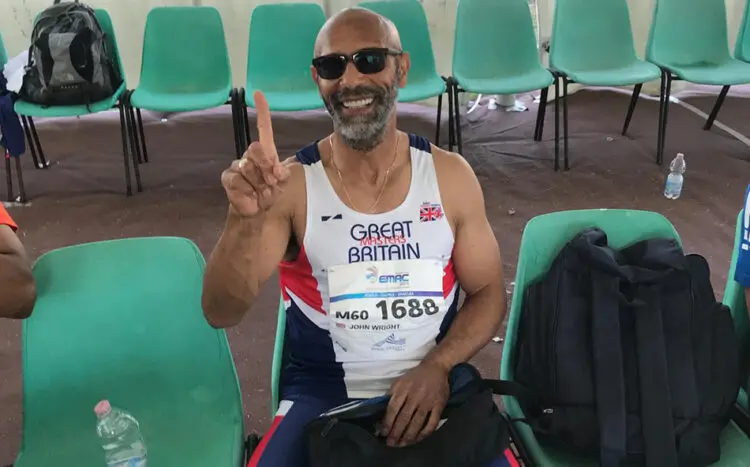
John Wright followed up his 12.38/0.4 M65 100m British record at Sheffield last month with a stunning 12.15/0.9 world record in the heats at the British Masters Championships at Derby.
Wright's time improved the world M65 mark of 12.31 set by Damien Leake in Grass Valley, USA in 2018.
A few hours later Wright won the M65 400m in 60.78 before winning the 100m final in 12.40/-0.8.
John Wright
Julia Machin, showed she is still going strong 36 years after she finished fifth in the European Junior Championships high jump when she improved her W55 world high jump record to 1.64m. She cleared it at the third attempt after a perfect record up to 1.60m.
She set her PB of 1.92m in 1990. Machin also won the triple jump with a 10.00m leap
Anne Gilshinan set Irish W60 records with solo runs in the 800m (2:28.13) and 1500m (4:56.90).
In the 800m she just missed the European age-group record by a few tenths and was even closer in the longer race to the world record.
Mark Symes
Mark Symes fell a second short of his UK M55 1500m record with a 4:18.41 victory.
British team manager and former world champion Dean Richardson won the M50 race by 12 seconds in 4:11.61 while his fellow team manager from Florida, Stuart Lynn won the M65 200m in 26.75/2.1.
Monica Williamson came close to the UK W65 1500m record with a time of 5:31.69.
Janet Smith set a UK W60 hammer record of 44.57m.
Luke Sinnott won the M45 long jump with 6.45/0.8 leap to fall just nine centimetres short of John Charlton's 32 year-old UK mark while even closer was W60 Jo Willoughby who jumped 4.43/0.0 which left her five centimetres short.
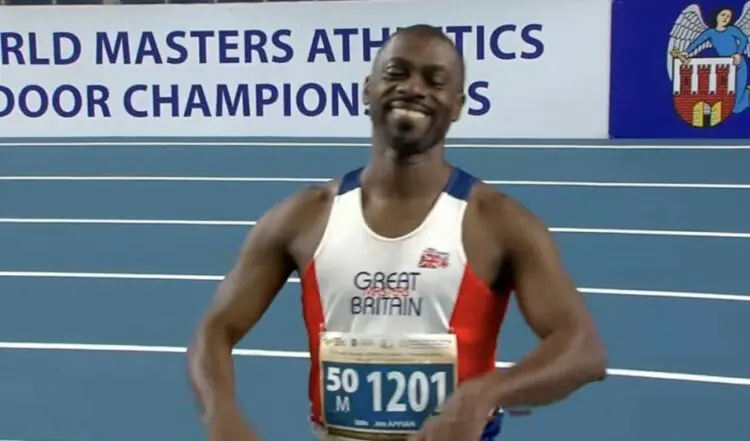
Multi world hurdles champion Joe Appiah won the M50 long jump courtesy of a 5.70/0.2 leap and later won his speciality in 14.07/1.1.
Joe Appiah
Multi world senior hurdles finalist Will Sharman won gold in the combined M35-M40 110m hurdles in 14.56/0.0.
Another Olympian in action was Keri Lees (formerly Maddox) and the 1991 European Junior champion won the W50 300m hurdles in 49.12.
Catriona Pennet won the W40 80m hurdles in 12.11/0.9.
Anthony Roker who set a 300m hurdles mark on Friday won M75 hurdles gold in 14.67/-1.2 to go close to Tony Bowman's UK mark.
Bowman, now an M90, set what could be the first ever mark in that age group with a 32.50 clocking and also jumped what is believed to be an inaugural triple jump mark of four metres.
Tony Bowman (Gary Mitchell)
Sally Hine smashed the UK W75 80m hurdles record with 18.57/0.3.
Kathleen Stewart was close to her UK W85 200m mark with 42.30/-2.1 and not helped by a hefty headwind.
Rob McHarg won a M60 800m (2:13.34) and 1500m (4:40.02) double while Chris Loudon won the M40 1500m race in 4:03.23.
Rob McHarg
Kevin Murch was three metres down on his UK M65 javelin record with a winning throw of 45.33m.
World masters M50 shot champion Stephen McCauley won the discus with a 50.14m throw and also took shot gold in 14.87m.
Virginia Mitchell won the W60 400m in 65.68 while fellow World masters medalist from Florida Wole Odele won the men's equivalent in 57.55.
Virginia Mitchelll (Tom Phillips)
World Masters runner-up from Gothenburg last year Gavin Stephens won M45 400m gold in 51.09 and also took the 200m title in 22.94/1.8.
Tracey Ashworth won gold in the W50 200m in 26.55/1.0 while Lisa Boland went close to her W40 record over half lap with her 25.42/0.9 victory.
Mike Coogan was the winner of the M50 200m in 23.40/1.5.
Many of the British athletes next big competition is the European Masters Championships in Madeira where with an entry of well over 500 out of 4000 entries Britain will have the largest team.
The next major domestic masters event for English cross-country runners is the English Masters International cross-country trial at Betley near Crewe on September 27.
There the leading finishers can guarantee a spot in England's team to take on Ireland, Scotland, Wales and Northern Ireland in Leeds in the Masters International in November.
No Ingebrigtsen makes for unpredictable and tactical 1500m final
Cole Hocker also misses final after controversial DQ, with the surviving finalists poised for intriguing strategic battle on Wednesday.
So now we know the finalists for the men’s world 1500m final on Wednesday evening in Tokyo.
Niels Laros of the Netherlands; Timothy and Reynold Cheruiyot of Kenya; Adrian Ben of Spain; Isaac Nader of Portugal; Jonah Koech of the United States; Tshepo Tshite of South Africa; Samuel Pihlström of Sweden; Andrew Corscoran of Ireland; Josh Kerr, Jake Wightman and Neil Gourley.
The list of absentees are hugely notable, too. They include the last two Olympic champions, Jakob Ingebrigtsen of Norway and Cole Hocker of the United States – the latter controversially disqualified for pushing in his semi-final on Monday.
Phanuel Koech of Kenya and Azeddine Habz of France – both so impressive on the Diamond League circuit this year – together with Olympic bronze medallist Yared Nuguse, who didn’t make the US team at all.
So does the absence of Ingebrigtsen in particular change the dynamic of the race? With the Norwegian in the field, it is almost guaranteed the pace will be fast and furious. He led the Paris Olympics last year at world record pace from the start, for example. Given this, will it be significant this week in Tokyo?
“Not really,” says Wightman, the 2022 world champion who qualified impressively on Monday, “as he (Ingebrigtsen) hasn’t won over the last three champs and there are new names and Laros has shown the damage he could do this year.”
Wightman adds: “I think you can set a game plan for Jakob a bit better – whether you can pull it off is a different matter – but it might be someone else doing that (leading) or it could be nobody doing that and therefore it might turn a bit like these semis have been.”
(Getty)
So if there is no Ingebrigtsen to lead, who might take it on. Tim Cheruiyot, the world champion in 2019, has a history of hitting it hard in races but his form has not been quite as impressive lately.
Surely Kerr will not enjoy the race turning into a last-lap scramble either. The defending champion is a strong runner who is good at kicking off a hard pace but perhaps not as zippy when things are slow and cagey. History tells us that Kerr sometimes enjoys making a long run for home, too.
Fans have joked before that it’s the turn of “the third Brit”, Gourley, to win a world title. He admitted on Monday, though, that he didn’t feel great in his semi-final as he finished fifth in the same race that Hocker was disqualified from. Gourley has not had a vintage year either, but he is strong tactically and has a punchy finish.
What odds on a “Spitfires out of the sky” moment with a GB clean sweep?
Coe, McKean and Cram in 1986 (Mark Shearman)
After his brilliant form on the Diamond League circuit, plus victories in the European Under-23 Champs and European Team Champs, Laros will probably start as favourite to take gold. The Dutchman looks the complete package this year – strong enough to run sub-3:30 but also possessing a powerful sprint finish.
It will likely boil down to who is in the best place at the right time. With this in mind it’s worth taking a look at the field events that are on during the evening – the men’s long jump and women’s pole vault finals.
Why? Because it’s clear the middle-distance runners are increasingly using the giant screens in the stadium to help them with their tactics.
(Getty)
After getting through his semi-final on Monday despite a stumble over the line at the end, Kerr said: “If they could show the effing race on the TV then the people at the front could see what’s going on behind them.”
Similarly, after leading the steeplechase final in the latter stages before finishing ninth, US runner Dan Michalski said: “Those things help a lot! Instead they were showing field eventers sitting around during our race.”
This was quite some time before Mondo Duplantis’s world record, too.
Whatever tactics might unfold, the last word, perhaps, should go to reigning champion Kerr. “It’s my title and it will be a real battle for whoever wants to come and take it off me.”
"Textbook George" strikes again
New Zealand runner Geordie Beamish unleashes trademark blistering finish to beat El Bakkali to world 3000m steeplechase gold in Tokyo.
There have already been some brilliant sprint finishes in these World Championships. Jimmy Gressier and Beatrice Chebet in the 10,000m. Alphonce Sambu and Peres Jepchirchir in the marathon. But Geordie Beamish’s finishing flourish to win 3000m steeplechase gold on Monday (Sept 15) will go down as one of the best in history.
Approaching the bell the 28-year-old from New Zealand was in 11th place and seemingly out of contention. Yet he moved into eighth down the back straight. Then fourth at the final water jump and, into the home straight, he still had to get past Soufiane El Bakkali, the two-time Olympic and two-time world champion from Morocco.
Beamish didn’t take the final hurdle perfectly but once he gets into sprint finish mode he is unstoppable. Surging past El Bakkali, he stormed to a brilliantly unexpected gold. It was, as keen track fans might say, a genuine “from the depths of hell” moment.
His sprint actually has its own name, though, called “Textbook George”. We have seen it before, too. But more of that later.
In storming to victory in Tokyo, he became the first non-African-born winner of a men’s steeplechase global title since Francesco Panetta of Italy in Rome in 1987.
“This was a turn-up, wasn''t it?” he said. “That was pretty unreal. I am still taking it all in.”
Geordie Beamish (Getty)
Later this week Beamish is set to be part of a presentation organised by his shoe sponsor, On, about “the art of steeplechase”. Now, the room is sure to be packed when it starts.
Those who know him well are familiar with his withering sprint finish. He demonstrated it memorably in March 2024, for example, when he won the world indoor 1500m title in Glasgow.
On that occasion he was fifth coming into the final straight on a small indoor track but managed to overtake Cole Hocker and Hobbs Kessler, among others, to take the win.
Geordie Beamish (left) (Getty)
So far "Textbook George" has not worked out too well in the steeplechase, though, as this was only his second victory in the event since switching from flat racing in 2023.
Such defeats include in his heat in Tokyo on Saturday, where he made headlines for being photographed with a fellow runner’s spiked shoe seemingly hitting his face after he fell. Beamish got up on that occasion and managed to qualify for Monday’s final by finishing second.
Geordie Beamish (Getty)
Beamish did, however, finish fifth in the last world final in Budapest two years ago. So he was hardly a no-hoper.
Like Gressier in the 10,000m final, a slow pace in the final no doubt played into his hands. The steeplechasers went through 2000m in just 6:01 – the kind of pace junior athletes are used to – with his winning time of 8:33.88 being easily the slowest in World Championships history.
“I just can’t believe how hot the crowd was," said Beamish. "Everything was hard but it all ended up well for me. It’s unreal. I’m pretty stoked. I did a lot in the last 200 metres. You just need to visualise winning before it happens – and it will happen.”
Easier said than done, his rivals might agree.
“I knew I had it in me tonight,” he added. “I only knew I’d win one metre before the finish and that was enough.
“It’s a first track gold for New Zealand at a world championships, which is pretty cool. The Olympic Games last year were brutal so to come here this year it’s just a testament to the team I have and how freaking hard this sport is. Nothing is given in this sport. Everything is earned.”
What made Beamish’s win all the more surprising was the fact he has endured a torrid time with injuries such as stress reactions since his Glasgow victory 18 months ago. Luckily, though, everything began to click for him in workouts in the last month.
Geordie Beamish and Soufiane El Bakkali (Getty)
El Bakkali also had a lot of work to do in the latter stages. The Moroccan was still in last place with a kilometre to go but he worked his way into contention gradually and was well placed at the bell and in the lead coming off the final bend.
He clocked 8:33.95 but was devastated and was still in tears during interviews about an hour after the race.
Edward Serem, a 17-year-old from Kenya, clocked 8:34.56 for bronze as Samuel Firewu of Ethiopia was fourth, Salaheddine Ben Yazide of Morocco fifth and Lamecha Girma of Ethiopia sixth – the latter having led down the back straight on the final lap.
El Bakkali said: “It’s very difficult for me to accept this result but I have to because this is high performance sport. I congratulated the athlete from New Zealand. I had good tactics but I clipped the last barrier and lost balance. I will work hard to regain the world title. Today was not the result I wanted, but sport wins tonight.”
One final question remains for Beamish, though. How far back dare he go before his trademark last-gasp sprint fails to work? “I’ve not found the limit yet,” he smiled.
Duplantis produces more Mondo magic
Tokyo crowd left in raptures as pole vault star produces his 14th world record at world championships.
The best sportspeople possess the ability to make time slow down. Whether it’s Lionel Messi spotting a pass no-one else can see, Carlos Alcaraz threading a forehand down the line or Simone Biles travelling through the air in a way which previously might have seemed inconceivable, they are all seemingly unhurried. Devoid of panic. In the zone.
Mondo Duplantis works like that, too.
Like all sportspeople, he has an unusual job. However, sprinting as fast as you can, carrying a long pole, before thrusting it into the ground and then hurling yourself upside down into the sky is a particularly unusual and difficult art to master. Yet master it the 25-year-old has and, in doing so, he has discovered a way to create magic.
(Getty)
Packed stadia across the world have witnessed what has now become a well-worn drill. First, victory in the competition is secured with a height that is just beyond the reach of his pursuers but well within his own particular skillset.
Next, the spotlight turns to him. By this stage in proceedings, usually all of the other events have finished and he is the sole athlete left competing. No distractions. Full attention. Everyone watching.
Before long, he is standing at the end of the runway, staring at the bar set at a height that, if cleared, will break the world record. It’s a scenario that would make most mortals shrink, but this is the place where the magic happens.
Before Monday evening (September 15), Duplantis had broken the world record no fewer than 13 times – three of those clearances coming this year. Centimetre by centimetre, he had raised the standard to 6.29m.
However, everyone knows there’s more to come and so, with a third successive outdoor title already won at the Tokyo national stadium, he faced up to the challenge of 6.30m. This is the place where he won his first Olympic title in 2021 but, back then, he did it in front a handful of onlookers and in an arena that felt "spooky". This time, there was an audience to share the occasion with.
(Getty)
Then came the "teasing" from the man in the middle. Of course he didn’t want to miss his opening two attempts – every vault saps more energy, places an extra load on the body and makes the job at hand harder – but the fact that his misses were of the very near variety simply heightened every single spectator’s senses.
Just as in Paris at last year’s Olympics, Duplantis had one chance left. The magic happened there and it happened in Tokyo, too. With the slow capping underway, he set off down the runway, lowered that pole, felt it catch in the box and then threw himself into the air.
It was at that point when time stood still. Up he went. Over he went. The bar stayed put. The place went nuts.
For Duplantis, a world record never gets old but there was an extra dimension to just how raucously he ran to celebrate his 6.30m leap with his fellow competitors, the parents who are also his coaches and his wife.
“It was not spooky today," smiled Duplantis, who was followed by Emmanouil Karalis, the Greek taking silver with a best clearance of 6.00m, while Australia’s Kurtis Marschall equalled his personal best with 5.95m to win bronze on countback from former world champion Sam Kendricks.
"The crowd was giving me a lot of really good energy, especially towards the end. That goes a long way in a competition. It exceeded my wildest dreams and expectations of what it would be like to jump in front a full crowd [in this stadium].”
(Getty)
Camryn Rogers also saved her best for the big occasion, producing a world-leading and North American record-breaking throw of 80.51m to win her second successive women’s hammer world title.
The Olympic champion led from start to finish, her opening throw of 78.09m giving her a level of control that she would not relinquish. It was in the second round where she truly settled the destiny of the gold medal, also moving to second on the world all-time list.
The battle for silver and bronze was fought out by two Chinese athletes in a superb final round. First, Zhang Jiale moved herself into second with 77.10m with her last throw, but Zhao Jie’s PB of 77.60m ultimately secured silver.
"I cannot believe it,” said Rogers, who went beyond 78 metres four times in her series. “Everything came together when it mattered the most. This is truly a very hard thing to accomplish. Over the last few years, my coach and I have been trying to figure it out – what is working in our training and all the little details. Now we have got the job done and I made my country and my family proud.
“They are here with me to celebrate afterwards. My mum started to cry. And I know my dad started too. This is the most incredible thing in the world. To win a world championships once is very hard, and to defend it is even harder. We kind of planned for the long throws but to set that intensity level, to be consistent throughout the competition, that is testament to all the training and work we have done."